A Bacterial Trick for Grabbing Sodium Turns up in Mammal Genes

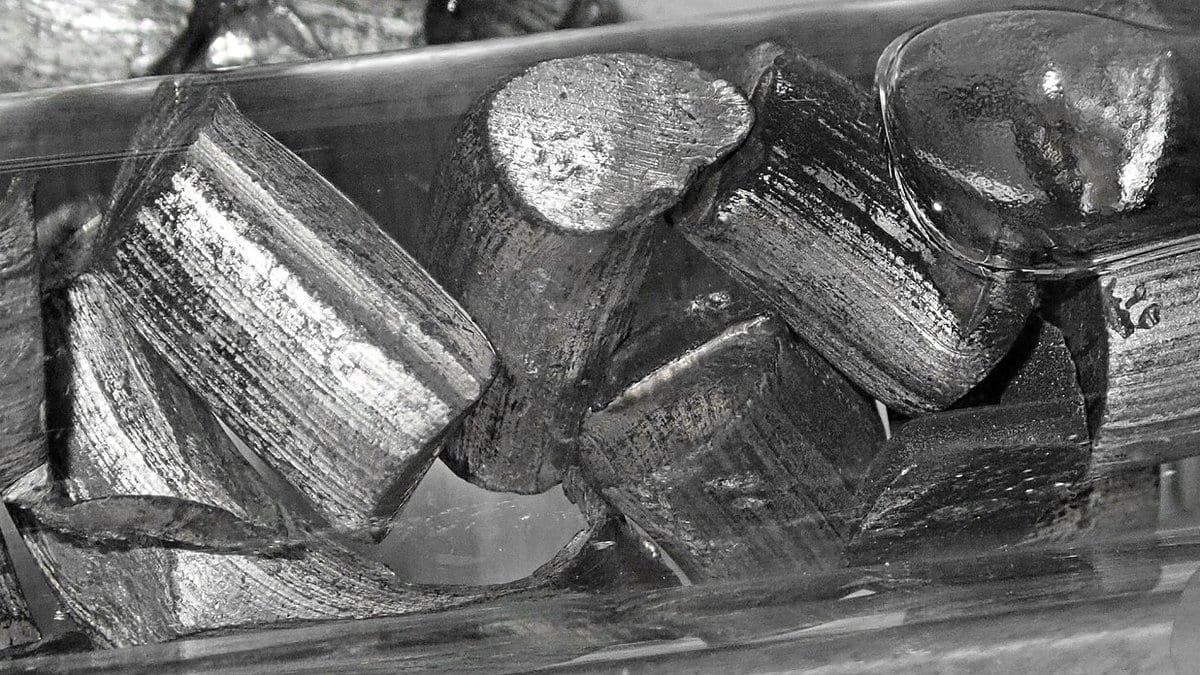
A bacterium has no nervous system and no hormones, and it still knows when it is drowning in sodium. Part of how it knows is a piece of its own messenger RNA, folded into a pocket that closes around a single ion; when the pocket closes, the gene downstream of it is read differently. No protein does the sensing. Since riboswitches were described, this has looked like a bacterial specialty, a leftover from an RNA-run past that animals replaced with receptors and signaling cascades.
A paper published on August 25 in the Proceedings of the National Academy of Sciences argues that mammals, humans included, are full of RNA built along the same lines. Neil White, Ronald Breaker and colleagues at Yale ran comparative sequence analyses across mammalian genomes and came out with numerous RNA motifs resembling, in sequence and in structure, the bacterial riboswitch parts that bind sodium and lithium. The candidates turn up in the messenger RNA of about 70 genes relevant to ion conductance, to the development and function of neurons, or to various neurological diseases.
The sensing part of a riboswitch is called an aptamer: a length of RNA that folds into a shape holding one particular thing. In bacteria that thing is often a vitamin or an amino acid. It can also be a bare metal ion, which is what two papers from this same laboratory established in 2022. One described a common bacterial motif that senses sodium, binding it in the low millimolar range while strongly rejecting every other alkali and alkaline-earth ion tested. The other described two classes that turn genes on when lithium accumulates, mostly genes for transporters that push the ion back out.
That is what selectivity means here, but it needs some clarification. These RNAs discriminate strongly against ions unlike their target. Sodium versus lithium is the pair they separate worst: the bacterial lithium riboswitches sit in front of transporter genes whose products themselves barely tell the two apart. So when the new paper says mammals use these aptamers to bind sodium and lithium selectively, it means selective against other cations. It does not mean a lithium detector.
The paper makes its case at two different strengths, and the difference is the whole story. Their bioinformatic and biochemical analyses, the authors write, support the hypothesis that mammals make extensive use of these RNA aptamers to bind the two ions selectively. That is the firmer of the two.
The second claim is more tentative. These structured RNA domains, the paper says, are often located in regions of messenger RNAs, or of the antisense transcripts opposite them, that suggest they are components of riboswitches. Finding a motif where a switch would go is a reason to look; it is not a switch. No mammalian gene has been shown to be turned up or down because one of these pockets caught an ion, and the authors do not say one has.
The abstract's last sentence is where the story gets its pull, and where it is easiest to overrun. The findings, the authors write, are also consistent with the hypothesis that lithium is a natural contributor to the regulation of genes relevant to certain mental disorders. The wording is important here. "Consistent with" is the weakest wording in the paper, weaker than the support attached to the binding claim. And "natural" means the lithium already in a body, from water and food, not a prescription.
The drug is what gives this finding much of its broader interest. Lithium has been used in psychiatry since the middle of the last century, and there is still no settled account of how it works. The authors do not offer an explanation. Nothing in the paper concerns the doses prescribed by psychiatrists; their hypothesis is about the trace amounts of lithium naturally present in the body.
There is an arithmetic problem the lithium idea will have to get past. Cells are awash in sodium; lithium, in a person not taking it as medicine, is present in traces, orders of magnitude smaller. A pocket that accepts both would be holding sodium almost all the time. That is not fatal to the hypothesis, but it is the first question it has to answer.
This is not the first animal aptamer to come out of this laboratory. In August 2025, the same group reported vertebrate members of two guanidine riboswitch aptamer classes, sitting near genes for calcium transport and neuromuscular function, with bench validation that they bind. One ligand earlier, the same shape of claim. That places the mammalian sodium and lithium result within a continuing line of work. It also means the bacterial groundwork came from the same benches, so it is a premise here rather than a second opinion.
For now this is one laboratory's case, made from sequence, structure and chemistry, that a regulatory trick biology thought it had left behind in bacteria is still running inside us. The experiment that would settle it is easy to describe and hard to do: change one of these motifs in a living mammalian cell and show that the gene above it makes less protein, or more.