Skip to content
See the World Through ScienceA project of ALLATRA

ULA Says Its Vulcan Rocket Failure Began Just After Liftoff
Space

Republish this story

Our work is licensed under Creative Commons BY-NC 4.0. You may republish this piece for free — with credit to ALLATRA Media and a link to the original, unedited beyond length trims, and not for commercial use.

Read the full license

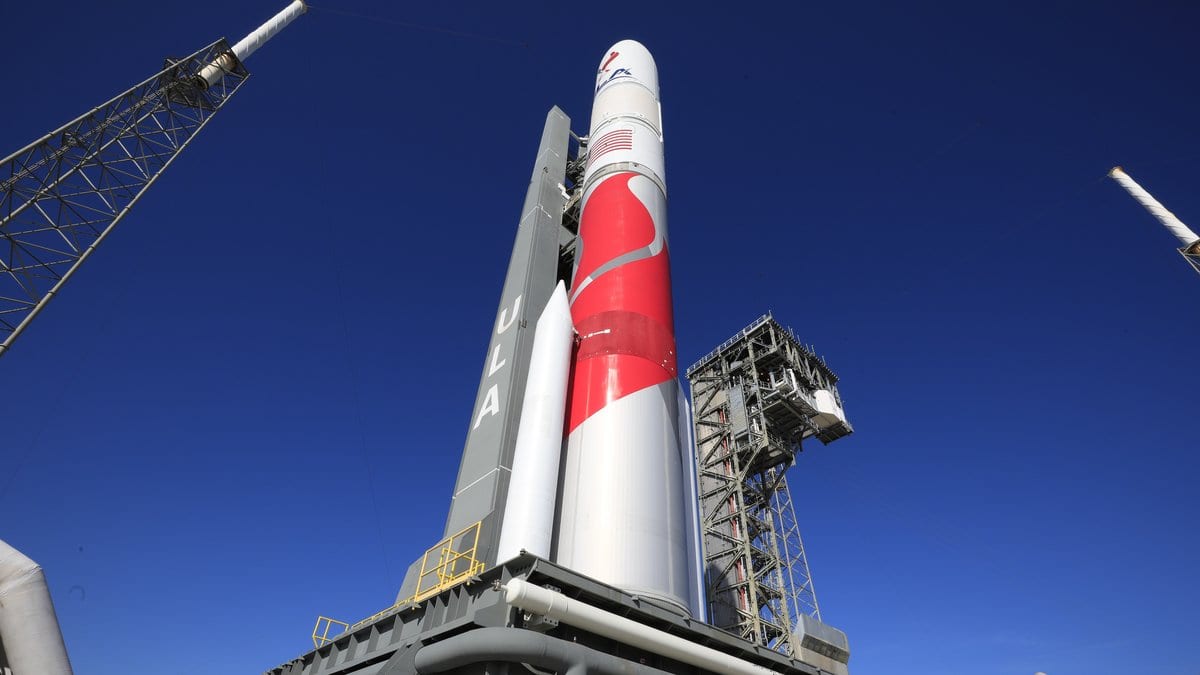
A white and red Vulcan Centaur rocket stands on its launch platform at Space Launch Complex 41, seen from below against a clear blue sky, with the pad service structure beside it.
A Vulcan Centaur on the pad at Space Launch Complex 41, Cape Canaveral, the launch site used for the flight that failed on Nov. 15, 2026. This rocket was rolled out for a different ULA mission on Jan. 5, 2024 (illustrative)."CLPS PM-1 Astrobotic-ULA Rollout for Launch (KSC-20240105-PH-CSH01 0056)" by NASA Kennedy Space Center / NASA/Cory S Huston, via Wikimedia Commons, Public domain

United Launch Alliance says early indications are that its Vulcan rocket suffered low booster performance just after liftoff on Nov. 15, 2026, leaving the vehicle too low and too slow to reach orbit with 40 satellites for Amazon's Leo broadband network.

The mission was Amazon Leo's first on a Vulcan and the first of 38 launches Amazon has on contract with ULA for the first-generation satellite network it is building to sell internet service from orbit.
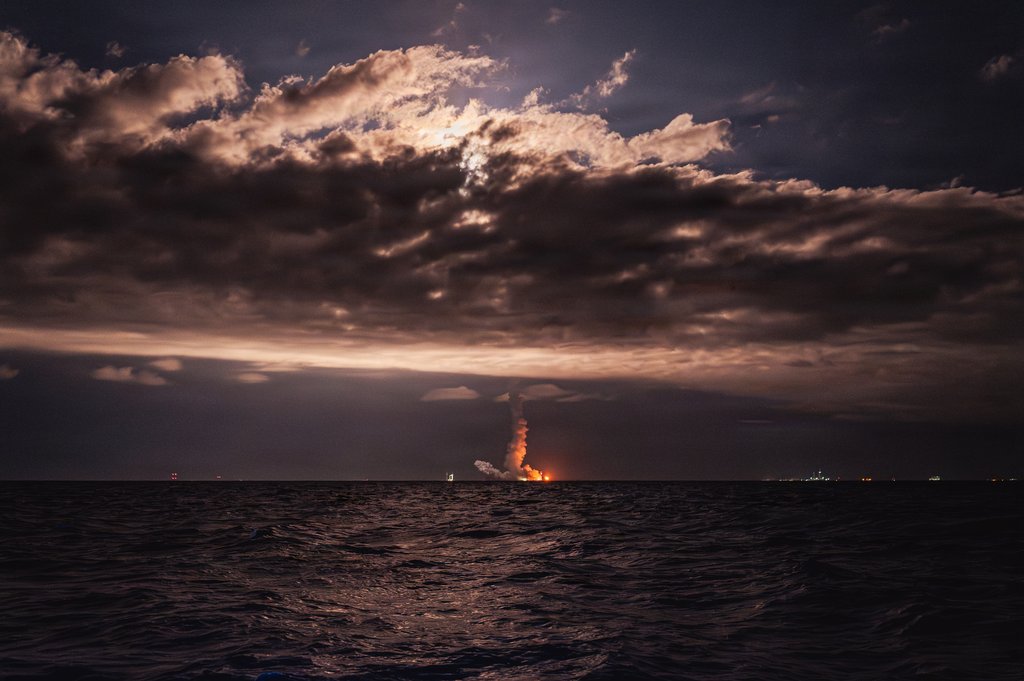
Seen from the ocean at night, a rocket rises as a small bright flame on a distant shoreline under a heavy cloud deck.
A Vulcan Centaur rises beyond the Florida coast, seen from offshore during a launch from Space Launch Complex 41 on Feb. 12, 2026 (illustrative). "USSF-87 Successfully Launches From SLC-41 (9519131)" by U.S. Space Force photo by Gwendolyn Kurzen, via Wikimedia Commons, Public domain

ULA's update of Nov. 17, 2026, says it appears to have lost both its data link to the rocket and the mission about 10 minutes into flight. The two stages separated while the vehicle was still low in altitude and slower than it needed to be to reach orbit. The second stage appears to have started as intended and its RL10 engines ran as planned, but it could not make up for the lost performance. The same update adds that all indications are that the solid rocket boosters performed normally, after nozzle improvements made for this launch.

ULA says the Federal Aviation Administration will oversee the ULA-led investigation, be involved in every step of it, and approve the company's final report, including any corrective actions. It describes the process as very early and wants to focus on the data and avoid speculation until the investigation is complete. The company has committed to returning to flight as safely and quickly as it can.

Amazon said before the flight that the mission was the first Vulcan to fly a shortened version of ULA's Centaur V upper stage, the first to fly in a six-booster configuration, and the first ULA launch to use Amazon-funded integration facilities at Cape Canaveral.

Sources

Spot an error?

Spot an error?

Report an error

Spotted a mistake on this page? Tell us what's wrong and our editors will take a look.

What kind of problem?

Only if you'd like us to be able to follow up. We won't use it for anything else.

We correct mistakes openly. Select any text to flag it. Fixes are logged under our Corrections Policy.

Report an error

Reporting on

ULA Says Its Vulcan Rocket Failure Began Just After Liftoff

What kind of problem?

Only if you'd like us to be able to follow up. We won't use it for anything else.

We read every report. Corrections are logged publicly.