Supercold Sensors Make It Easier to Tell What Is in Nuclear Fuel
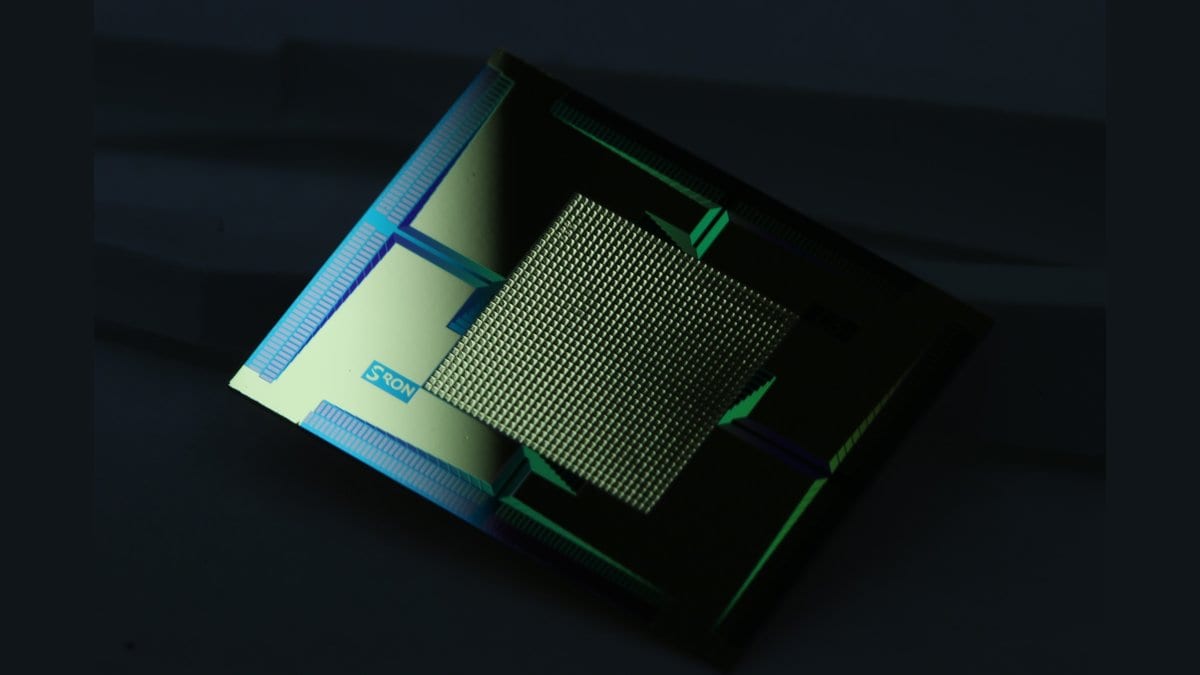
Researchers at the National Institute of Standards and Technology have measured the X-rays given off by uranium, neptunium and plutonium with less uncertainty than earlier measurements, using detectors chilled to a fraction of a degree above absolute zero. NIST announced the work on September 10, 2026.
The X-rays are a source of interference. Nuclear material is identified by the pattern of gamma rays it emits, and the three elements also emit X-rays in the same energy range, blurring that pattern. NIST says measuring the X-rays precisely allows the background to be subtracted, so a facility can judge what a sample contains more accurately and faster.
Abigail Wessels, Joel N. Ullom and colleagues at NIST, the University of Colorado Boulder, Los Alamos National Laboratory, Houghton University and Sorbonne University in Paris published their measurements in Physical Review Letters. The sensitivity of the detectors, NIST said, "reduced the uncertainty of the X-ray energy measurements by one-third to one-eighth compared with previous measurements."
"Our measurements support international nuclear safeguards by enabling more precise accounting of material in nuclear facilities," said Jonathan Dean, a physicist at NIST and the University of Colorado Boulder.
The detectors are transition-edge sensors, superconducting films that work as fine thermometers. A single X-ray photon warms the film just enough to change its resistance, in proportion to the photon's energy.
The precision matters for isotope ratios, the mix of heavier and lighter forms of one element, which helps distinguish reactor fuel from weapons material. Uranium-235 accounts for 0.7% of natural uranium, NIST said, and must be concentrated to a few percent for fuel and to 90% for weapons-grade material. Faster readings would also shorten the waits between steps in preparing reactor fuel, Dean said.
NIST said it has installed the detectors, with Los Alamos National Laboratory, at three Department of Energy laboratories. The cooling equipment is too bulky to be handheld, so a detector needs a power supply on site. Two U.S. companies now build a NIST-designed compact refrigerator for them.
Sources
- www.nist.gov
- Physical Review LettersPeer-reviewed