Water Ice Stacks Differently at the Pressures Inside Uranus and Neptune
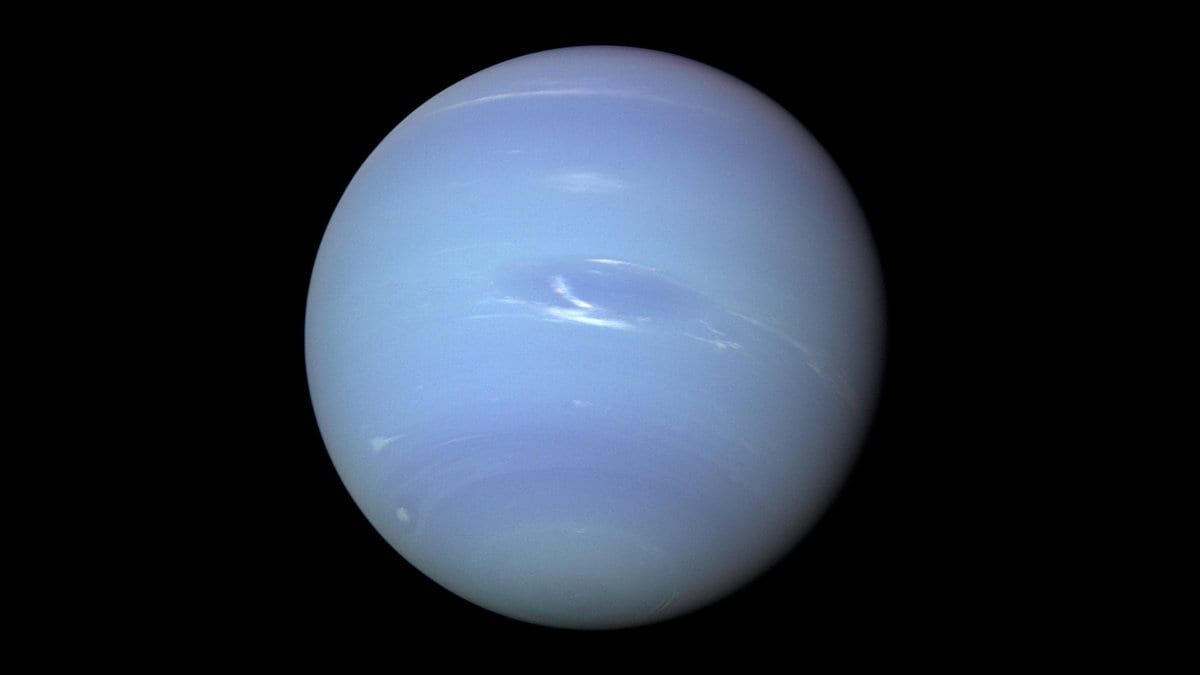
Physicists squeezing water between diamond tips and heating it with lasers report that the ice's oxygen atoms settle into a hexagonal stacking pattern at conditions like those deep inside Uranus and Neptune. Above 200 gigapascals and 1,800 kelvin, that hexagonal close-packed arrangement becomes the dominant one. Alexis Forestier, Paul Loubeyre and colleagues report the result in Physical Review Letters on Sept. 9; they work at the French atomic energy commission CEA, Sorbonne University and the European Synchrotron Radiation Facility.
That pressure is roughly two million times atmospheric pressure at sea level. Uranus and Neptune are classed as ice giants, and their interiors are modeled as hot, compressed water and other ices. The transition may have implications for models of the two planets, the paper says.
The team used synchrotron X-ray diffraction on samples held in laser-heated diamond anvil cells, presses that squeeze a speck of material between two diamond tips. The hexagonal packing becomes dominant as the ice enters the superionic state, in which hydrogen moves freely through a solid oxygen framework. The evidence for that crossing, the authors write, is an unusual expansion of the sample as it is heated.
The observations fit the hexagonal packing becoming more stable than the cubic packing the ice holds at lower pressure. The authors describe the changeover, which spans the range from 130 to 200 gigapascals, as a martensitic transition, meaning the atoms shift together rather than diffusing.
The hexagonal ice turned up a second way as well. As the samples cooled and reverted toward another cubic form, it emerged from stacking disorder that developed in the cubic oxygen lattice, the team reports.
Sources
- Physical Review LettersPeer-reviewed