A Gene That Dominates Alzheimer's Risk Was Hiding Nine Others
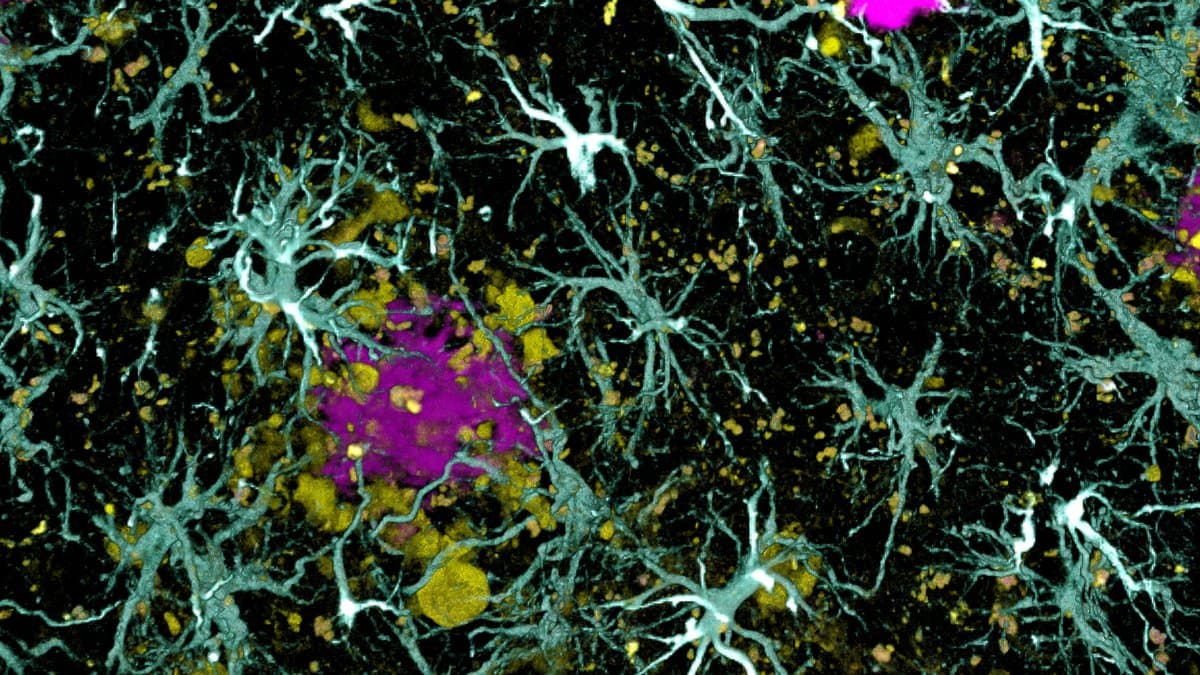
Researchers who analyzed the genetics of Alzheimer's disease separately in carriers and non-carriers of the high-risk ε4 version of the APOE gene found nine genetic signals for the disease that never appear when everyone is analyzed together. The work was published Sept. 14 in Nature Genetics.
The authors say the split should shape who is enrolled in future drug trials. Recent trials of anti-amyloid treatments suggest less benefit and a higher risk of severe side effects in ε4 carriers, they write, and they argue it may now be timely to sort participants by APOE status before a trial begins rather than afterward.
APOE has been the loudest genetic influence on late-onset Alzheimer's for decades, one of more than 90 stretches of DNA linked to the disease and far larger in its effect than any other; why its ε4 version raises risk and its ε2 version lowers it is still poorly understood. Jesper Qvist Thomassen of Rigshospitalet in Copenhagen, Ruth Frikke-Schmidt of the same hospital and colleagues ran the scan inside each APOE group instead of across all of them, pooling cohorts from Europe, Asia and the Americas: 24,033 people with an Alzheimer's diagnosis and 363,161 without in the group carrying neither version, and 29,122 and 164,206 in the ε4 group.
Nine genes emerged only under that split: HP1BP3, SLC50A1, PTPRC, NPAS3, DDHD1, CHST9, SMYD2, PRAMEF1 and GFRA1. DDHD1 is the one the authors single out, calling it "especially promising." The variant they found there was associated with lower risk in ε4 carriers (an association rather than a demonstrated mechanism), and the same variant is tied to reduced activity of the gene in brain tissue. DDHD1 is also involved in a rare inherited neurological disorder.
The team checked its regions of interest in Japanese, Chinese, Korean, African American and admixed American cohorts as well. DDHD1 and one signal in the immune-gene region called HLA behaved similarly in the East Asian and European data. In the smallest group (people carrying the protective ε2 version), no signal passed the study's significance threshold at all.
Sources
- Peer-reviewedNature Genetics