A Rare Electrical Property Found in a Material Chipmakers Already Use
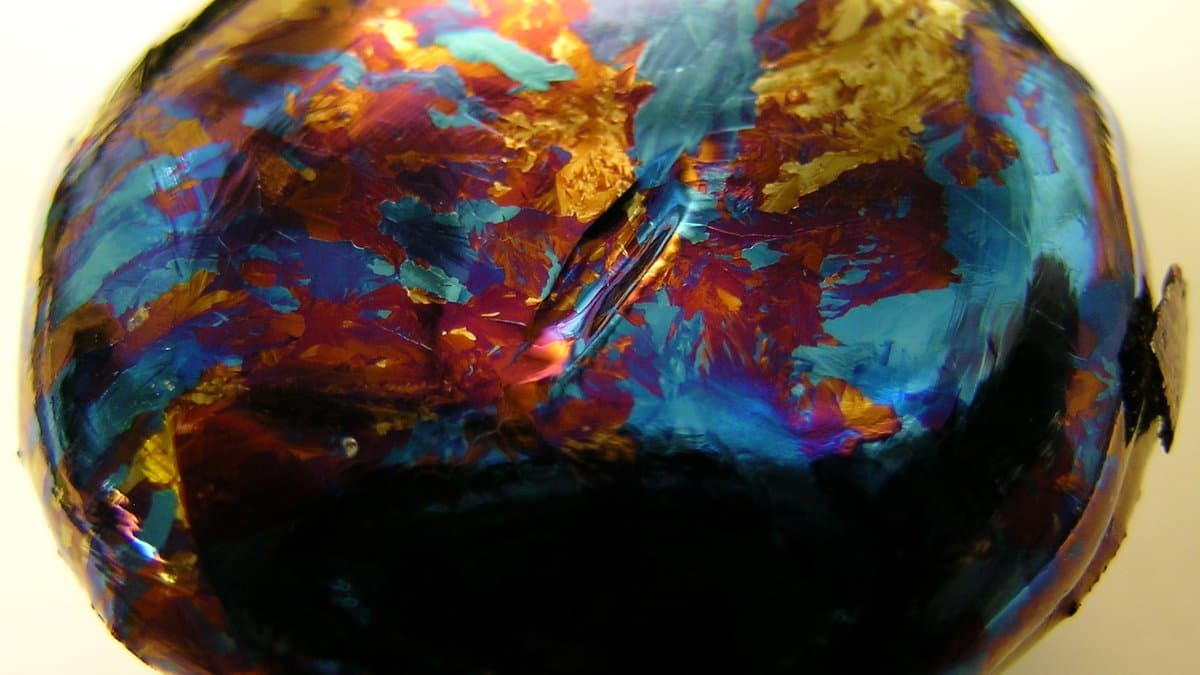
Physicists at the University of Nebraska-Lincoln report that hafnia, the hafnium oxide already deposited as a thin insulating layer inside ordinary computer chips, is antiferroelectric when it is grown as a strained single crystal: its electric dipoles order in alternating directions instead of all pointing the same way. The result was published in Science on Sept. 24, 2026.
The authors describe antiferroelectrics as promising for energy storage, solid-state cooling and memory technologies, and say such materials are scarce and their scalability is largely unexplored. That is why the host material matters: the paper calls hafnia lead-free and CMOS-compatible, made with the same process as commercial silicon chips. What was measured is a property of laboratory-grown films, not a working device.
Xin Li, Xiaoshan Xu and colleagues at Nebraska, together with co-authors at Washington University in St. Louis and Oak Ridge National Laboratory, grew single-crystal films of lanthanum-doped hafnia on yttrium-stabilized zirconia, a crystal substrate. The team reports that under compression the polarization of neighboring parts of the crystal points in opposite directions, and that the electrical response shows the stable double loop that marks an antiferroelectric.
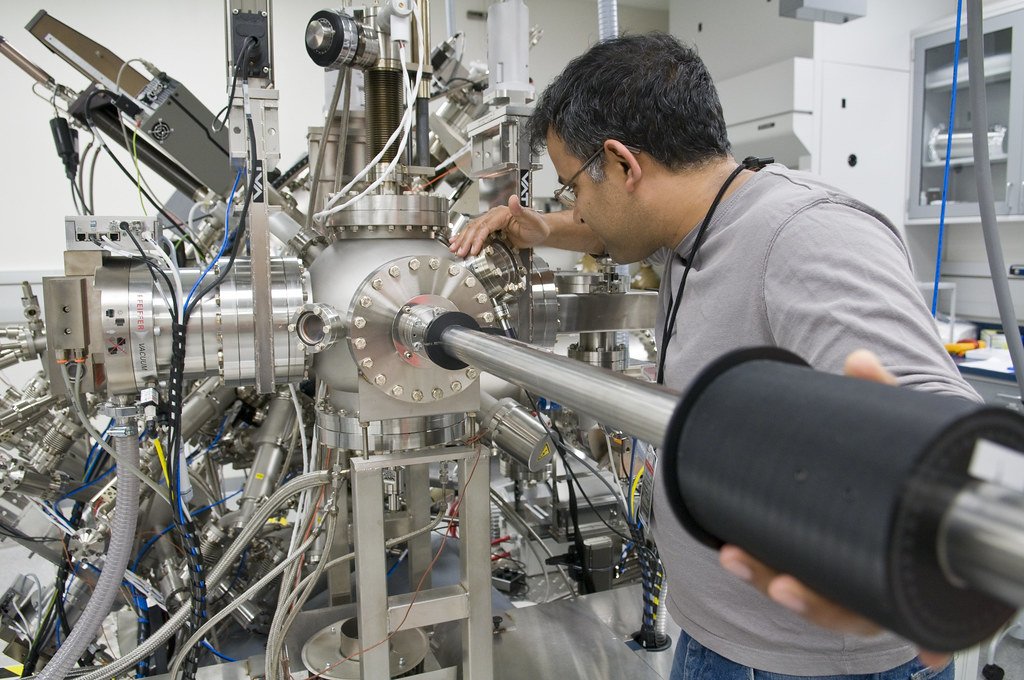
The paper singles out what the thinnest films did. Compression strengthened the alternating order as the films got thinner rather than weakening it, and at what the authors call the two-dimensional limit, the ordering temperature reached 850 °C. Above that temperature the alternating arrangement breaks down.
The paper also reports that this alternating-dipole form of hafnia follows the Kittel model of antiferroelectricity, the theoretical account of how such dipoles line up.
Sources
- SciencePeer-reviewed