Disabling One Gene Turned Human Pancreas Cells Into Insulin Makers
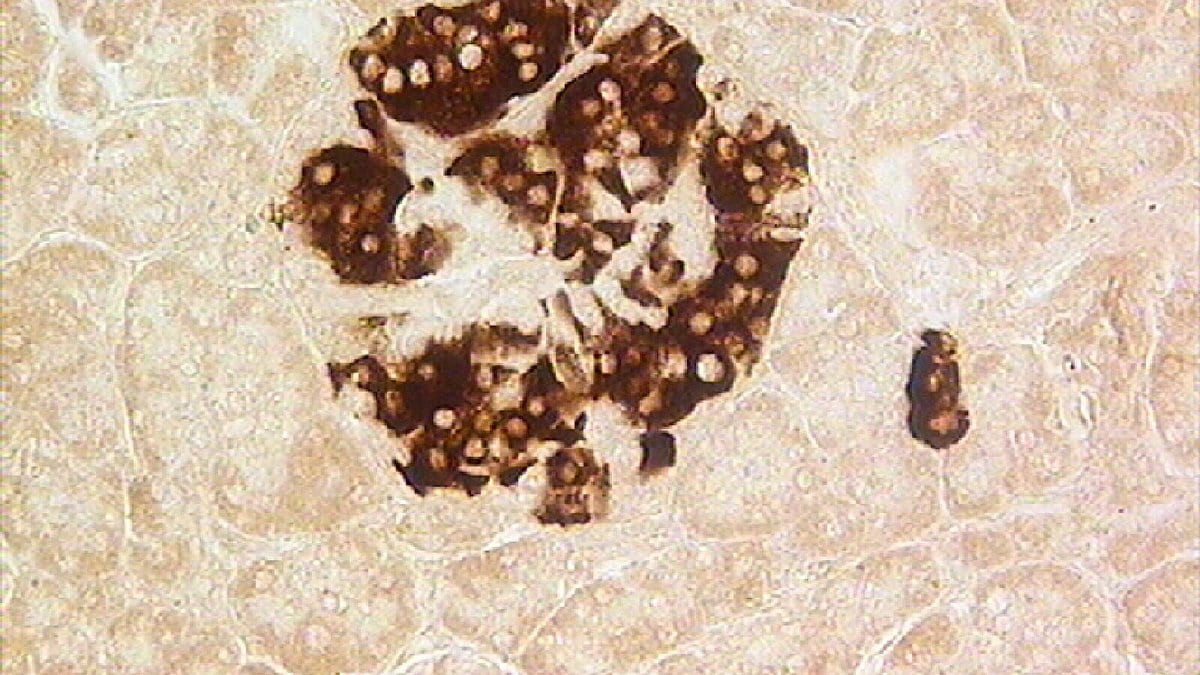
Jian Li, Peng Yi and colleagues at the Joslin Diabetes Center at Harvard Medical School report that switching off a single gene turned human pancreatic duct cells into cells that make insulin, and that the converted cells held blood sugar near normal for six weeks in diabetic mice. The work was published Sept. 2 in Science Translational Medicine and was done in cultured human cells and in animals; nobody has been treated with it.
The team was looking for a way to rebuild the insulin-making beta cells that diabetes destroys. Its paper puts the finding no higher than identifying "a gene that could potentially be targeted" in human duct cells to do that.
The gene is ALDH3B2. The researchers found it with a genome-wide CRISPR screen, a search across every human gene for the ones that keep duct cells in their existing identity. They report that the loss of that one gene's function was enough on its own to convert both a cell line and human duct cells. The converted cells switched on the genes that mark a beta cell at substantially higher levels and released insulin in response to glucose, which is the test a working beta cell has to pass.
To try them in an animal, the team transplanted the cells under the kidney capsule of mice whose insulin-making cells had been destroyed with streptozotocin, a drug used to give laboratory animals diabetes. Blood glucose fell to near normal and stayed there for six weeks.
Duct cells were already known to be capable of becoming beta cells. What is new is the single gene: the authors write that how the switch happens, and whether it can be steered to rebuild beta-cell mass, are not well understood.
The paper lists funding from Breakthrough T1D, the Beatson Foundation and the Mary K. Iacocca Foundation.
Sources
- Science Translational MedicinePeer-reviewed

Medical Disclaimer: This content is provided for general informational and educational purposes only. It is not medical advice and should not be used as a substitute for professional medical advice, diagnosis, or treatment. Always consult a qualified healthcare professional regarding any medical condition, concern, symptom, or treatment decision.