Rusty Crusts on a Malawi Plateau Hold a 400-Million-Year Climate Record
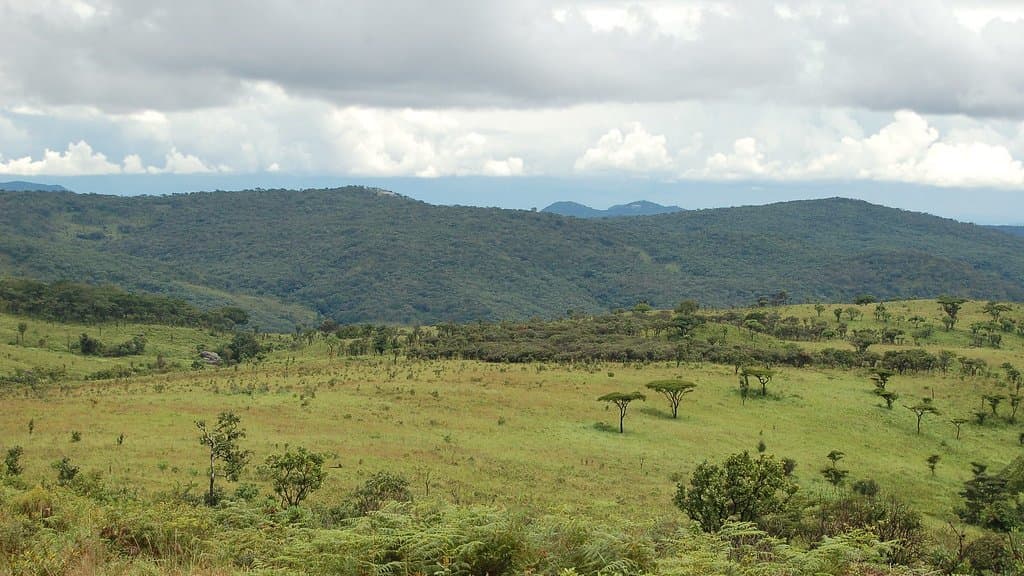
A team led by researchers at Université Paris-Saclay has dated the iron-rich crusts that cap a plateau in northern Malawi, finding a continuous span of mineral ages running from 397 million years ago, plus or minus 40 million, to less than 1 million years ago. The study appeared Sept. 19 in the open-access journal Communications Earth & Environment.
In their paper, the authors say they set out to test whether iron-rich crusts like these, which form on ancient erosion surfaces, can hold clues to how a continent's climate changed over very long stretches of time. Their samples came from the Nyika plateau, about 2,000 meters up, on a land surface isolated since at least the Permian period.
Maximilien Mathian, Cécile Gautheron and colleagues measured the iron minerals in the crusts using the helium left behind by decaying uranium and thorium, then paired the ages with chemical and mineral analyses. Out of that continuous span, three main bursts of mineral growth stand out, in stretches of geological time called the Devonian, the Late Cretaceous and the Quaternary.
The team interpreted these clusters as marking periods when southeastern Africa was warm and wet over the last 400 million years. That reading is an inference from when the minerals grew and what they are made of, not a direct measurement of past temperature or rainfall.
TotalEnergies funded the study through its Rift to Passive Margins research project, and one co-author is based at the company's research center in Pau, France. The authors declare no competing interests, and a geologist at the Geological Survey Department of Malawi is among its authors.