A New Deep-Sea Coral Contains the Same Material as Insect Shells
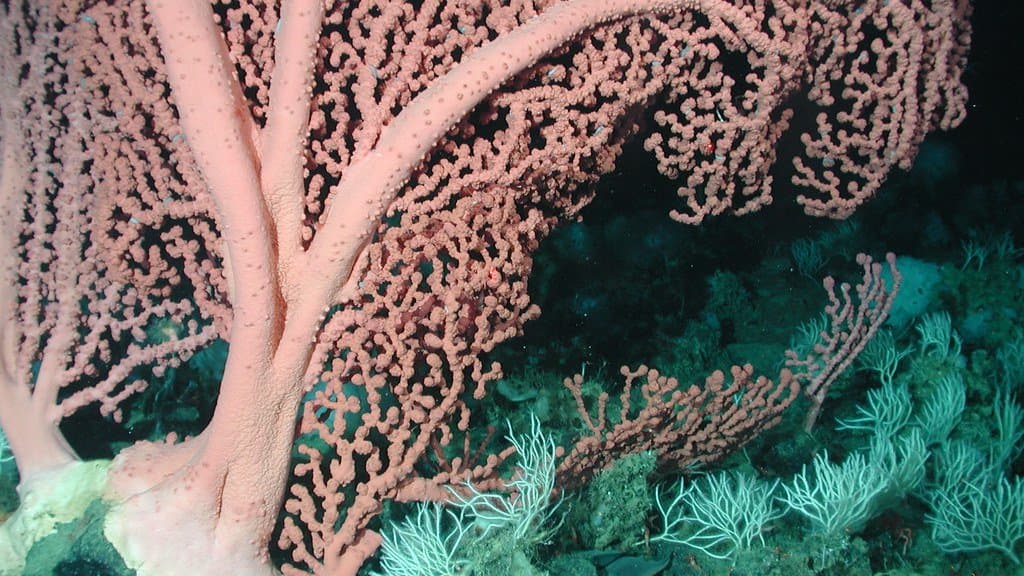
Researchers have described a new species of bubblegum coral from the Nazca Ridge in the southeastern Pacific and found chitin, the tough material of insect shells and fungal cell walls, in its tissue. The team reports it as the first evidence of visible chitin in the tissues of octocorals, the group that also includes sea fans.
Bubblegum corals form some of the largest branching colonies in the deep sea without any central skeleton. How they hold that shape, using only mineral grains smaller than a millimeter, has remained unexplained. The authors suggest that the chitin has a mechanical role, and that it may account for the size and flexibility of colonies built without a skeleton.
The colony was collected at 670 meters on the Nazca Ridge during Schmidt Ocean Institute expedition FKt240708, aboard the research vessel Falkor (too). Juan Armando Sánchez of Universidad de Los Andes in Bogotá, Javier Sellanes of Universidad Católica del Norte in Coquimbo, Chile, and colleagues named it Paragorgia quitinosa in the open-access paper, published Sept. 13 in Scientific Reports.
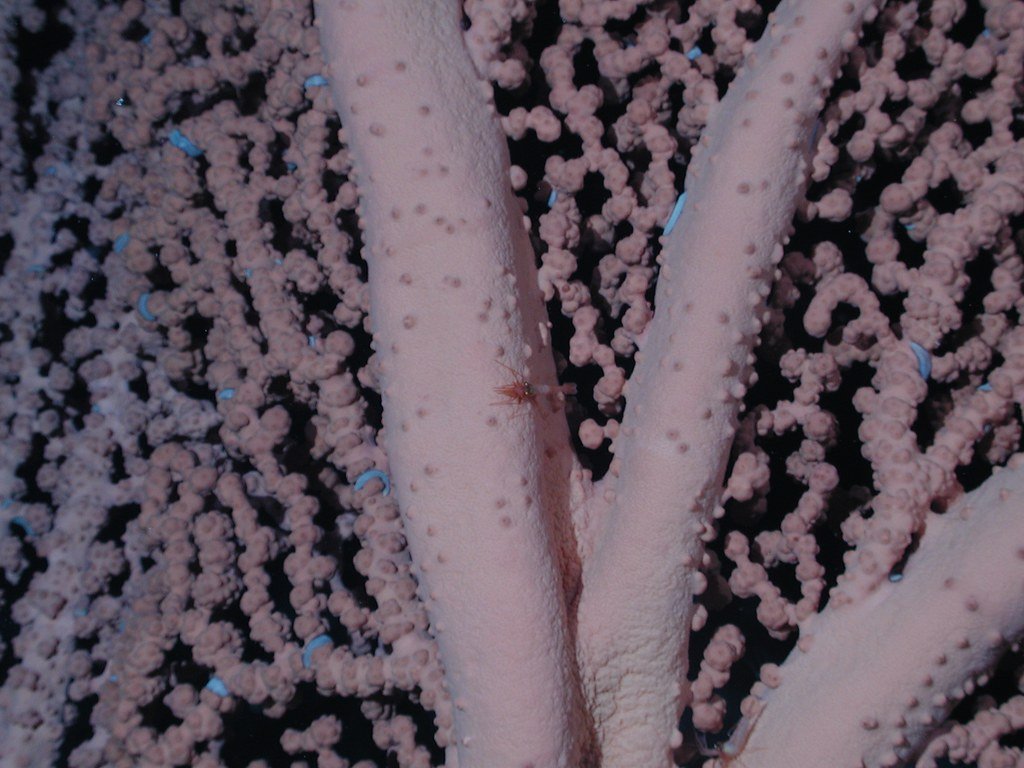
Four laboratory methods, among them electron microscopy and infrared and Raman spectroscopy, confirmed chitin in the canal walls that run through the colony's soft tissue, and in a second Paragorgia specimen. Those walls are built from a sugar-based substance that survived treatment with dilute bleach.
The paper places the finding as the third report of chitin in the anthozoans, the class of corals and sea anemones, after sea anemones and black corals. X-ray scans of the named specimen showed a female carrying several batches of eggs, held in only one of its two kinds of polyp.
Sources
- Peer-reviewednature.com