Volcanic Vent off Italy Gives Ocean Acidification a Hard Number
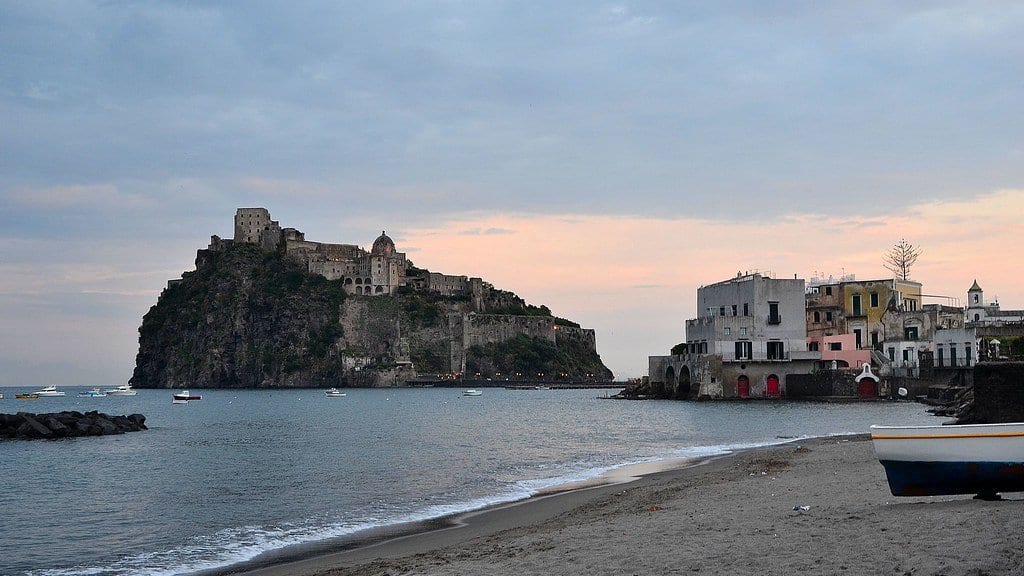
Researchers working at a natural carbon dioxide vent off the Italian island of Ischia have put a measured value on the seawater acidity at which seafloor shell builders give way: pH 7.7. Below it, the sediment's single-celled shell builders, called foraminifera, shift from species with hard calcium carbonate shells to species that glue their shells together from sediment grains. The work was published Oct. 8, 2026, in Scientific Reports.
Fabrizio Frontalini of Urbino University, Jan Pawlowski of the Institute of Oceanology at the Polish Academy of Sciences, and colleagues describe the paper as a framework that reads shell type rather than species lists, meant for forecasting how coastal ecosystems respond to acidification and for planning adaptation. Most published acidity limits for these organisms come from laboratory tanks; this one was measured in the sea.
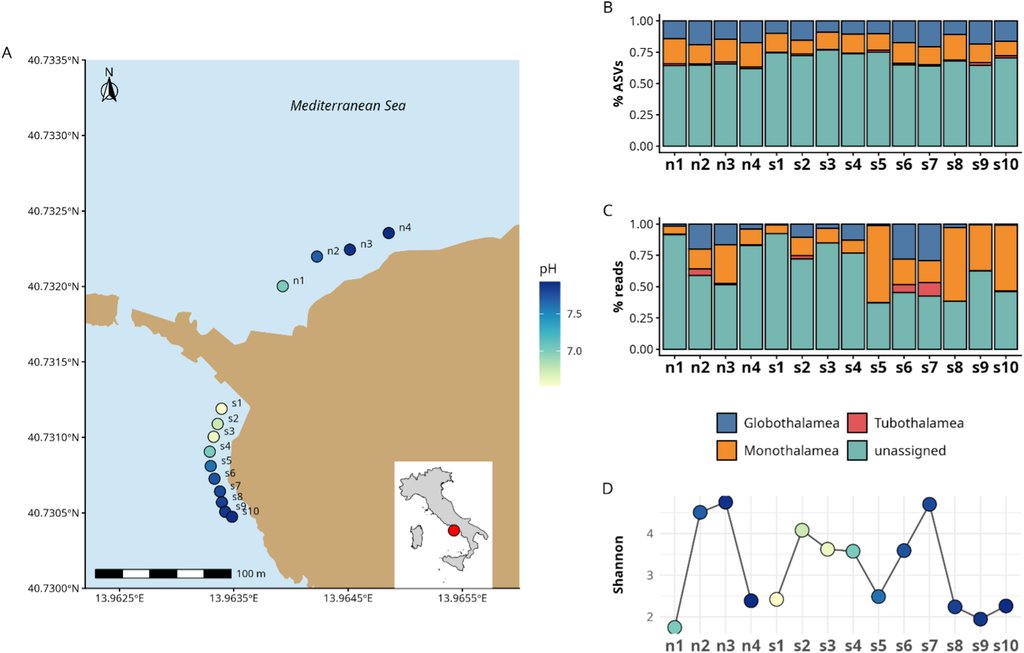
The team sampled sediment at 14 sites around Castello Aragonese, off Ischia in the Gulf of Naples, in October 2021. Volcanic gas keeps the water there acidic. They combined DNA sequencing with shell counts under a microscope. Only pH significantly predicted which community a site held; oxygen and depth did not. Species diversity on its own showed no significant relationship with pH, and the shift appeared instead in what the shells were made of.
The authors then applied the threshold to an ensemble of climate projections. More than 400,000 square kilometers of Mediterranean coastal seafloor would fall below pH 7.7 by 2090–2100 under SSP5-8.5, the highest-emission scenario of the five they ran. The Balearic Islands, the Venice Lagoon, the Gulf of Corinth and parts of the Thracian Sea sit in persistently acidic water in that projection, which rests on one vent system and one group of organisms.
The authors say a shift toward species that build no carbonate shell would weaken the seafloor's carbonate production and reduce how much carbon dioxide these sediments lock away. Earlier work at the same vents, based on shell shapes alone, had placed the switch a little higher, near pH 7.8. The sequence data, the analysis tables and the R code are public.
Sources
- Scientific ReportsPeer-reviewed