An Ocean Glider Caught a Marine Heatwave Effect Satellites Cannot See
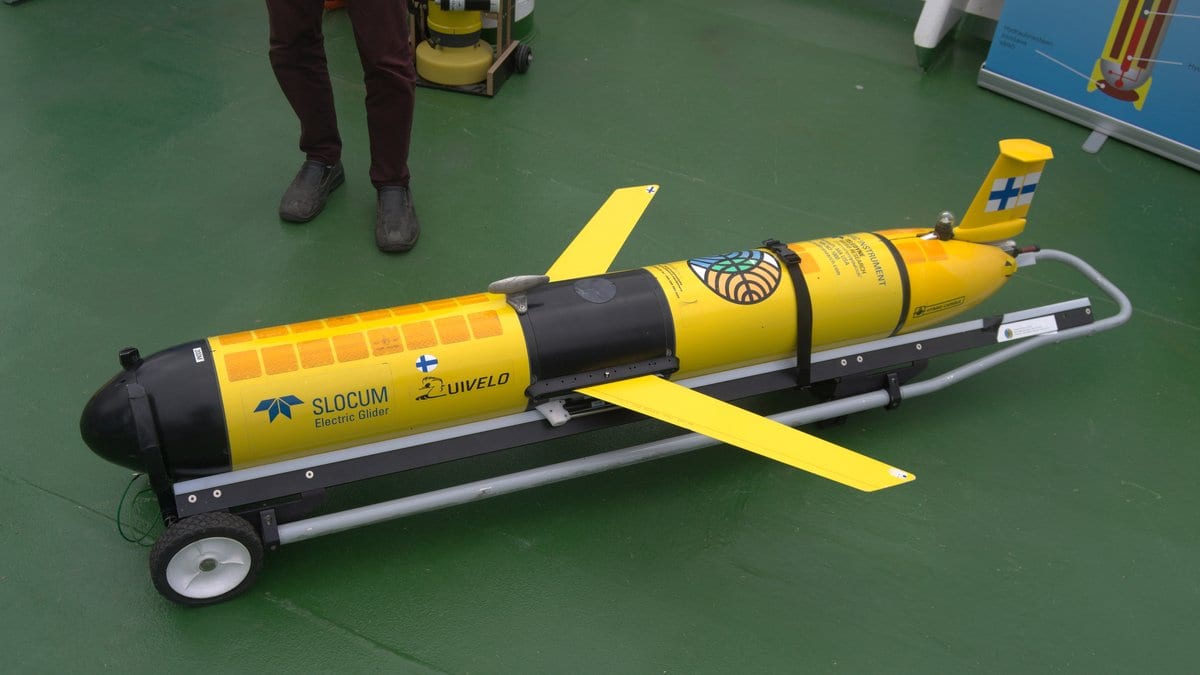
An autonomous ocean glider measured chlorophyll from the sea surface down through the water column during a marine heatwave in June 2023, and the two depths did not behave alike: the surface rise was sharp and brief, while the rise beneath it held on. The record comes from one glider deployment through one event, and it was published Oct. 8, 2026, in Communications Earth & Environment.
Satellites read chlorophyll, the green pigment in marine plant life, only in the surface layer, and the authors say their paper shows why sustained measurements through the full depth of the water are needed to detect how ecosystems respond to climate extremes. Charlotte A. J. Williams of the National Oceanography Centre in Liverpool, Joanne E. Hopkins, and colleagues report that the glider worked in a shelf sea that splits into a warm upper layer and a cooler deep layer each summer.
The team reports that surface chlorophyll climbed from under 1 to more than 5 milligrams per cubic meter and then fell back. Below, in the band of densest chlorophyll that sits under the surface layer, concentrations rose from typical post-bloom values of 1–2 to more than 3 milligrams per cubic meter, with occasional peaks above 9.
The authors do not settle the cause. The layer of water near the seabed warmed faster than usual and horizontal temperature differences strengthened, which is consistent with a possible influence of water moving sideways through the area; stronger sunlight at the surface may also have contributed.
The paper classifies the event as Category IV, the top step of a marine heatwave scale published in the journal Oceanography, whose labels run from moderate to extreme; the scale's authors reported that very few recorded events reach it.
The glider work was part of the PELAgIO project under the Ecological Consequences of Offshore Wind programme, which the Natural Environment Research Council co-funds. The paper is open access.
Sources
- Communications Earth & EnvironmentPeer-reviewed