Italy's Low-Snow Winters Cut Summer River Flows by About Half
Winters that brought less snow than normal shortened the snow season in Italy's mountains by as much as a month and cut summer runoff by roughly half, according to a study of 38 catchments across the country. Francesco Avanzi and Luca Ferraris of the CIMA Research Foundation in Savona, Italy, and colleagues published the work Sept. 14, 2026, in Hydrology and Earth System Sciences.
Snow droughts are winters that leave less water stored in the snowpack than usual. They have drawn attention as an emerging hazard, but what they do to water supplies, plants and people is still poorly understood. To trace those effects, the team combined more than a decade of snow and river records with measurements of plant growth, an inventory of emergency water restrictions and a survey of mountain hut managers.
The shortening showed up at every elevation, and the snowpack melted away entirely more often than in other years. Most of the low-snow winters in the sample were warm as well as dry.
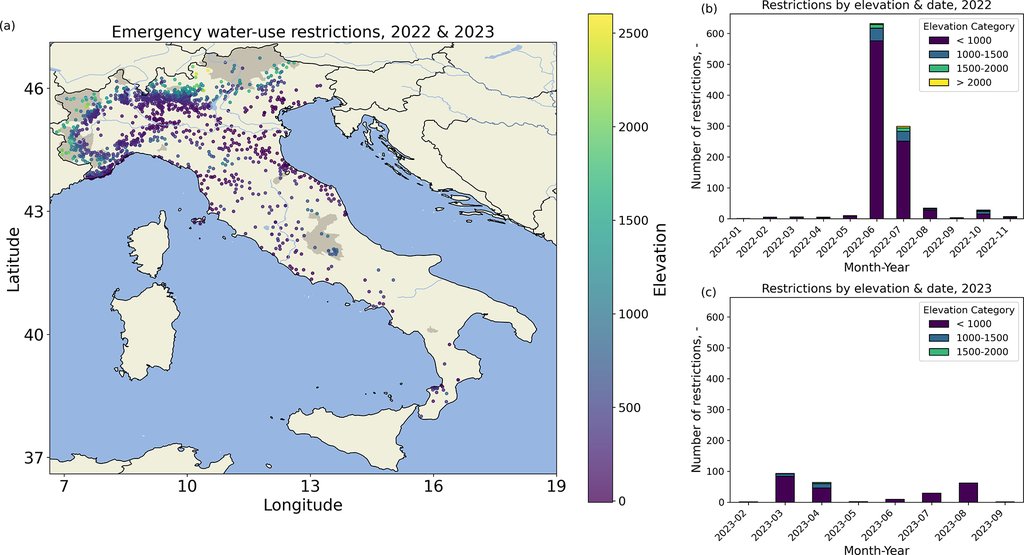
In the snow droughts of 2022 and 2023, emergency water restrictions were issued at all elevations, most often across the foothills rather than the plains. In the survey, about 70% of hut managers above 2,000 meters reported problems with their water supply, and 28% reported closing earlier than planned, representing self-reported data rather than direct measurements at the huts.
Not everything moved in the same direction. Plant growth over the growing season after a snow drought ran up to 10% higher than after a normal winter, particularly at higher elevations, which ground data suggest resulted from the snow melting out early and the greening starting early.
The researchers call snow droughts "a deeply multi-sectorial and multi-elevation risk," reaching from the snowpack to water supply, ecosystems and society. The study is open access.
Sources
- Peer-revieweddoi.org
