A Hopeful Gray-Whale Number NOAA Itself Won't Celebrate Yet
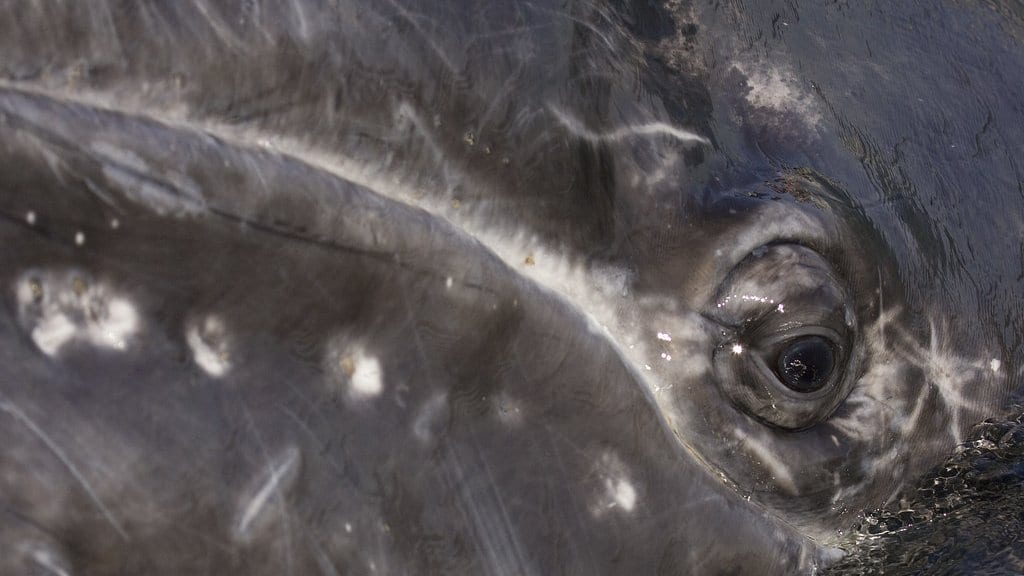
On paper it looks like good news for a population that has had little of it. NOAA's new estimate lands at about 17,750 gray whales, with a range of roughly 15,930 to 20,530, well above last year's average of 12,890. The count follows years of trouble: an unusual mortality event declared in 2019, when strandings spiked along the West Coast, which the agency finally closed in 2023 as the deaths eased.
But NOAA is doing something researchers rarely do with an upbeat number. It is warning readers not to trust it too much. The problem is arithmetic. A whale population simply cannot add nearly 5,000 animals in a single year through births; there are not enough calves for that. And 2025 was the opposite of a baby boom. NOAA counted just 85 calves, the lowest figure on record. If the whales are barely reproducing, a leap of that size cannot be real growth.
So what is it? The agency's leading research scientist, Aimee Lang, points to the limits of the survey itself. "We know that we don't see every whale," she says, and the count depends on observers watching migrating whales pass fixed points along the coast, calibrated with drones. If the whales change when or where they travel, the same method can return a very different number without the population having moved at all. NOAA notes that some gray whales now linger seasonally in San Francisco Bay, exactly the kind of behavioral shift that could distort a shore-based census.
The honest reading, then, is uncertainty. The rise might reflect a genuine, partial recovery that the survey happened to catch well this year; it might be an artifact of a small number of whales behaving differently; it is probably some mix. NOAA's willingness to flag its own good news as provisional is the most reliable thing in the report. The gray whales may be turning a corner. This particular number is not yet the proof.