Drought Is Getting Worse, but Not Faster
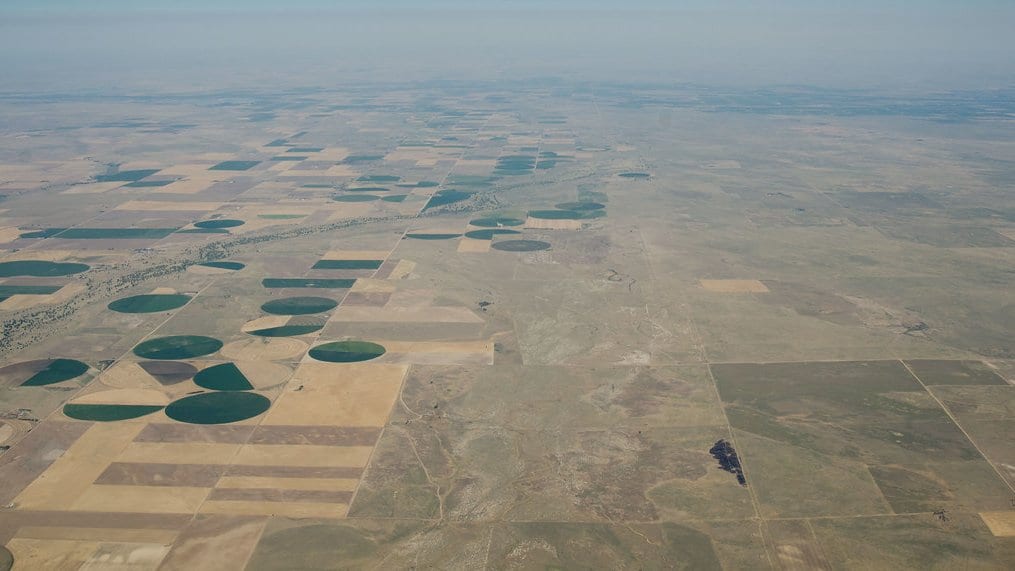
A study published Sept. 11 in Communications Earth & Environment reports no statistically significant acceleration of drought across about 99% of the land it examined between 1981 and 2024. The drought acceleration reported by other recent studies, the team concludes, largely reflects the method used to calculate it rather than a real response of the land to warming.
Drought did intensify over that period under both approaches the team tested. What it could not detect is acceleration, meaning drought worsening at an increasing rate. The authors say the distinction matters for climate risk assessment and for adaptation planning, both of which lean on published drought trends.
At issue is evaporative demand, the amount of water the atmosphere can pull out of the land, which no instrument measures directly. Jiameng Xu and Yuanchao Fan of Tsinghua University and colleagues recalculated a widely used drought index using several estimates of that demand, grouped into two families. Penman-type equations, the standard choice, work from air temperature and humidity as though the surface were always wet. Energy-based formulations limit the demand to the energy actually available at the surface. The Penman-type versions produced drying trends at least six times stronger across drought severity, frequency and duration.
The study argues against a 2025 paper in Nature that reported warming accelerating global drought severity. That conclusion rests on comparing drought trends between two selected time spans, a method the researchers note is highly sensitive to year-to-year variability.
The analysis covers what the authors call quasi-global land, the band between 50°S and 50°N, and leaves out the driest areas. Repeating the test on records reaching back to 1901 gave the same answer.
Sources
- www.nature.comPeer-reviewed