Ocean Chemistry Reveals How Much Fresh Water Two Antarctic Glaciers Release
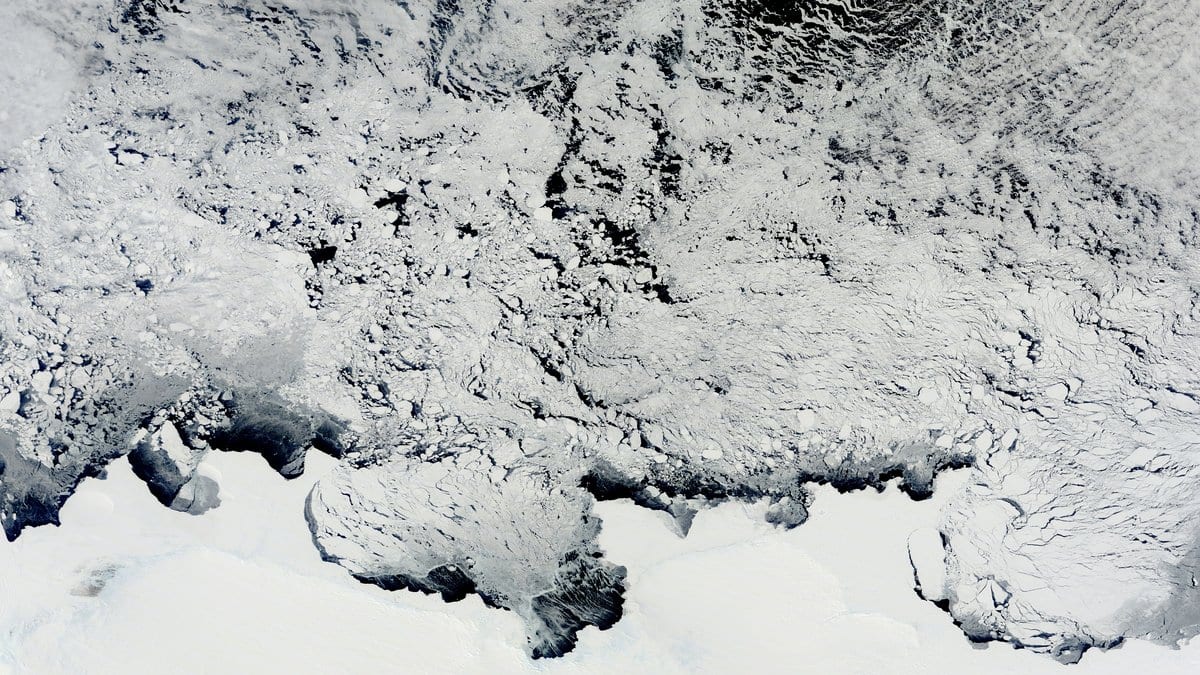
Two East Antarctic ice shelves are releasing 70 ± 7 and 53 ± 9 billion metric tons of glacier meltwater into the ocean each year, according to a reconstruction published Sept. 11 in Nature Communications. The larger figure belongs to the Totten Ice Shelf, the smaller to the neighboring Moscow University Ice Shelf.
The study maps where that fresh water sits in the ocean off this sector of East Antarctica, a distribution that has remained poorly constrained. The researchers add that the same approach could be used in other polar waters where measurements are scarce.
Yutaka W. Watanabe of Hokkaido University, Kohei Mizobata of the Tokyo University of Marine Science and Technology and colleagues estimated the meltwater from the carbon dissolved in seawater, known as dissolved inorganic carbon, rather than assuming a fixed chemical makeup for the meltwater itself. A statistical model paired with a small neural network predicted how much carbon a water sample should hold, and the gap between that prediction and the measured value was attributed to glacier meltwater diluting the water. The freshwater signal reaches across the continental shelf to about 64 degrees south.
The two ice shelves drain the Aurora Subglacial Basin and together hold ice equivalent to about 5.1 meters of global sea-level rise. The authors also observed differences in discharge between their earlier and later observations, and say the sampling is too sparse in time for those differences to be read as a long-term trend.
The ocean measurements come from the Global Ocean Data Analysis Project and from Japan Antarctic Research Expedition cruises. Both datasets are publicly archived, and the paper is open access.
Sources
- www.nature.comPeer-reviewed