Big Particles in Amazon Air Are Good at Making Ice Clouds
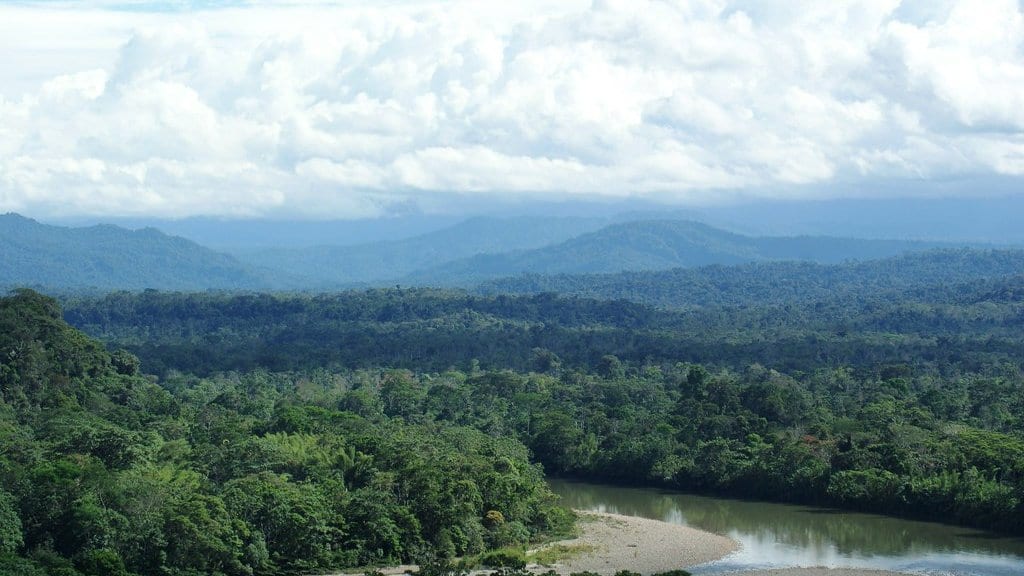
Particles floating in the air over the northwestern Amazon are efficient at starting the ice in cirrus, the thin clouds that form high in the atmosphere. The larger particles do it better as the air gets colder. The measurements were published Sept. 11 in the journal Communications Earth & Environment.
While cirrus clouds are common over Amazonia, no quantitative measurement of what starts the ice in them had been made in the rainforest before this study, whose first and corresponding author is Luis A. Ladino of the National Autonomous University of Mexico. Ladino and colleagues say their result bears on the planet's energy balance if particles of this size are present in large enough amounts high in the atmosphere.
The team sampled at a site in northwestern Amazonia across two seasons, the biomass burning season and the rainy season, and tested the particles at the temperatures and moisture levels found in cirrus and in mixed-phase clouds, which carry water droplets and ice together. Under mixed-phase conditions, ordinary background particles control how ice forms, in amounts comparable to those measured in central Amazonia.
At the colder cirrus temperatures, the efficient particles were the ones larger than a micron, a thousandth of a millimeter. Analysis of single particles indicates they are rich in organic material and mineral dust, suggesting they are likely to come from local sources.
The work brought together Mexican and Colombian institutions, including the Colombian research institute SINCHI, which supported the field campaigns. The study is open access under a Creative Commons Attribution license, and the publisher has posted the accepted version ahead of the final edited text.
Sources
- www.nature.comPeer-reviewed