Patients on an AI-Designed Lung Drug Scored Younger on Every Aging Test Tried
Six computer models that estimate a person's age from proteins in the blood were run over blood samples from the same 42-patient drug trial, and all six scored the treated patients younger. Insilico Medicine's founder, Alex Zhavoronkov, and colleagues published the reanalysis Sept. 7 in Nature Biotechnology. The samples come from a 12-week trial whose results were published in 2025; no new patients were treated for this work.
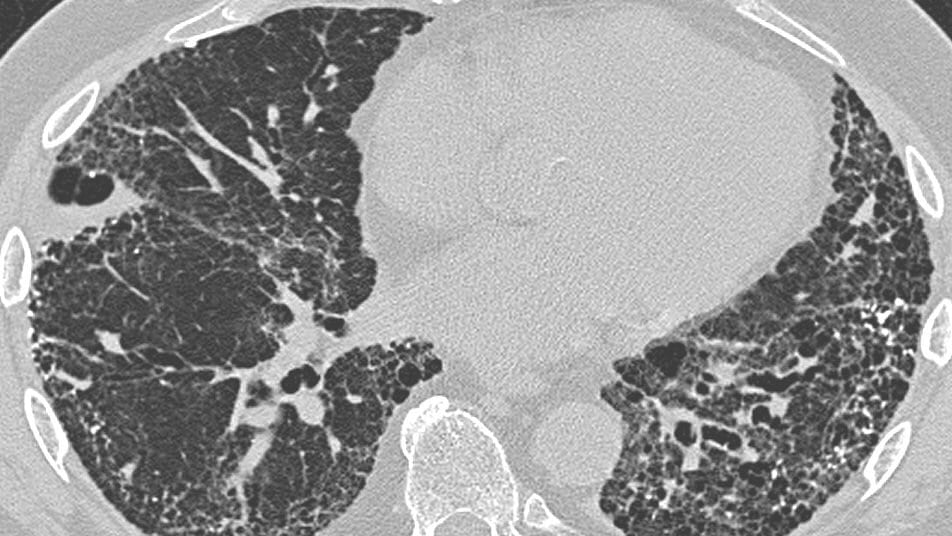
The drug is rentosertib, a candidate treatment for idiopathic pulmonary fibrosis, a scarring lung disease. Both its biological target and its molecule were picked using artificial intelligence. The authors say the purpose of the exercise is to support trial designs that measure aging and disease together, so a drug aimed at one illness can be checked for effects on aging without a separate study.
What the models produce is a prediction, not a measured age. The paper states that the clocks "cannot deconvolute aging- and disease-specific effects" — they cannot separate slower aging from the effect of treating a sick lung. Insilico's release puts the largest shift at roughly three to four years of predicted age, and up to six years on one clock, at a single dose and a single time point.
Insilico sponsors rentosertib, designed it, and has taken it into phase 3 testing in China. The company's release is headlined with a potential for "Biological Age Reversal"; the paper's own title claims support for "simultaneous geroprotective assessment." Michael Levitt, a Nobel laureate in chemistry quoted in that release, says what convinces him is the agreement between models rather than the size of the effect, and adds: "This trial cannot yet separate slower aging from a treated lung, and the authors say so plainly."
The trial data sit with the China National Center for Bioinformation under accession OMIX008341, and Insilico says the analysis code is published as an open-source Python library.
Sources
- doi.orgPeer-reviewed
- insilico.com

Medical Disclaimer: This content is provided for general informational and educational purposes only. It is not medical advice and should not be used as a substitute for professional medical advice, diagnosis, or treatment. Always consult a qualified healthcare professional regarding any medical condition, concern, symptom, or treatment decision.