Skip to content
See the World Through ScienceA project of ALLATRA

A 270-Digit Number Has Been Factored, and the Public Record Moves Again
AI & Technology

Republish this story

Our work is licensed under Creative Commons BY-NC 4.0. You may republish this piece for free — with credit to ALLATRA Media and a link to the original, unedited beyond length trims, and not for commercial use.

Read the full license

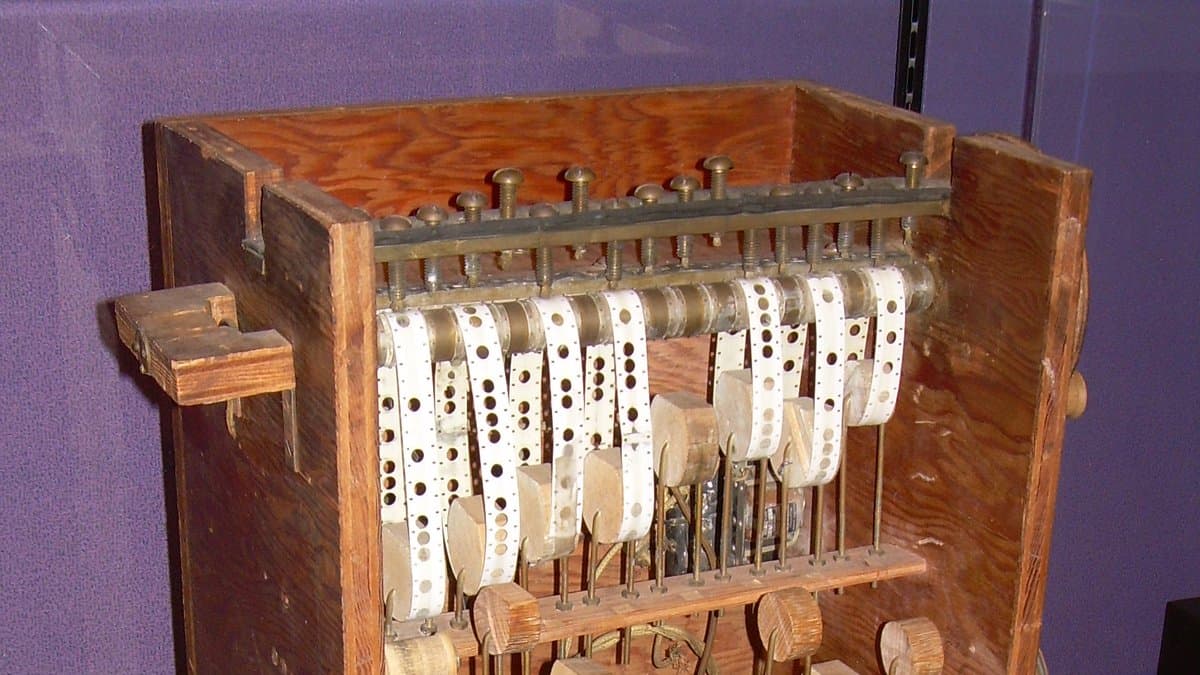
A wooden cabinet holding rows of punched steel chains and brass gears, an early machine for number theory calculations, inside a museum display case.
A Lehmer sieve at the Computer History Museum in Mountain View, California. The Lehmers built these machines in the 1930s to work through number theory problems, including the search for factors (illustrative)."File:Lehmer sieves (1936) - Computer History Museum (2007-11-10 22.53.28 by Carlo Nardone).jpg" by Carlo Nardone from Roma, Italy, via wikimedia, CC-BY-SA-2.0 · CC-BY-SA-2.0

Stephen A. Weis has published the two prime factors of RSA-896, a 270-digit number from the RSA Factoring Challenge that nobody had broken in public before. He dates the factorization to Sept. 19, 2026.

That moves the public record for the largest RSA challenge number ever factored to 896 bits, from 862 bits. Wikipedia's list of RSA numbers records both results and dates the 862-bit factorization to Sept. 3, 2026, 16 days earlier.

The challenge numbers exist to measure this. RSA Laboratories published them to track the practical difficulty of factoring large integers, the same entry says. What moved is that measure, not the safety of the RSA keys in everyday use, which are longer. Every larger challenge number on the list is still unfactored.

Weis writes on his site that he factored the number with Claude, Anthropic's AI model. The page names no hardware, no algorithm and no figure for how long the computation ran.

The result does not rest on his account. Both published factors are prime, and multiplying them returns the published number exactly, which anyone holding the digits can check. Weis posted the number and both factors in full.
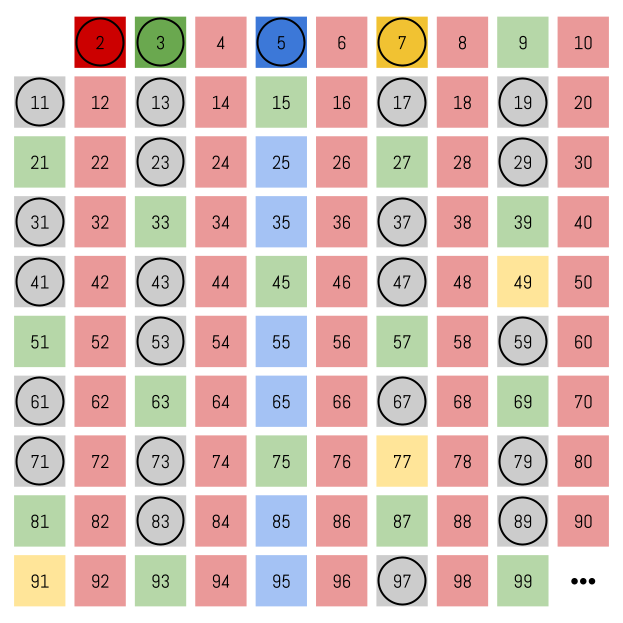
A grid of the numbers 1 to 100 with the multiples of 2, 3, 5 and 7 shaded and the remaining prime numbers circled.
The sieve of Eratosthenes crosses out the multiples of each prime in turn and leaves the primes standing. Finding primes is easy; recovering the two primes hidden inside a 270-digit product is the hard direction (illustrative). "Sieve of Eratosthenes Visualized" by TrinityArk, via wikimedia, CC-BY-SA-4.0

The challenge itself is long closed. RSA Laboratories ended it in 2007 and the remaining prizes were withdrawn, the same entry records, so the numbers still standing are factored for the record alone.

Sources

Spot an error?

Spot an error?

Report an error

Spotted a mistake on this page? Tell us what's wrong and our editors will take a look.

What kind of problem?

Only if you'd like us to be able to follow up. We won't use it for anything else.

We correct mistakes openly. Select any text to flag it. Fixes are logged under our Corrections Policy.

Report an error

Reporting on

A 270-Digit Number Has Been Factored, and the Public Record Moves Again

What kind of problem?

Only if you'd like us to be able to follow up. We won't use it for anything else.

We read every report. Corrections are logged publicly.