Study Lifts the Count of OCD and Tic Risk Genes From Four to 36
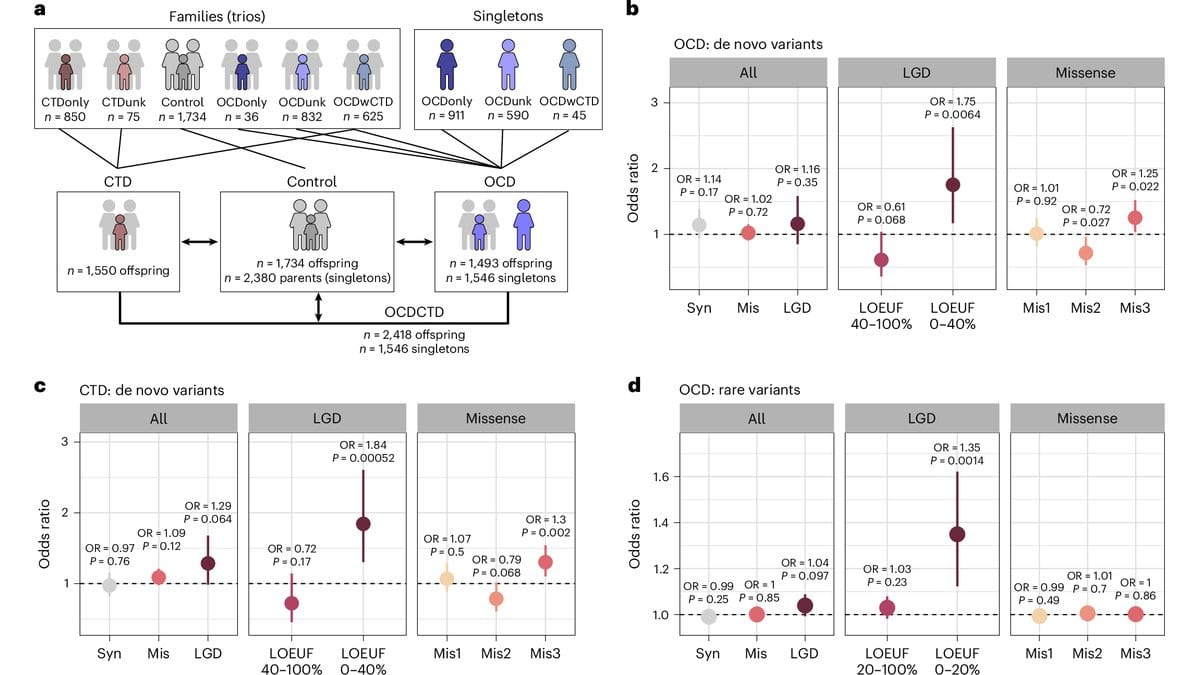
Researchers have identified 36 genes in which rare mutations sharply increase the risk of obsessive-compulsive disorder and chronic tic disorders, up from four previously known. The study was published Sept. 1 in Nature Neuroscience and is open access.
The team analyzed whole-exome sequencing data (DNA readouts covering the protein-coding part of the genome) from 3,964 people with OCD, chronic tic disorders or both, including 2,418 trios, meaning a patient sequenced alongside both parents. The authors report an excess of new and rare protein-damaging mutations in those cases, and name 36 genes as high-confidence risk factors.
Four of the 36 had already been established as high-confidence genes: CELSR3, CHD8, SCUBE1 and WWC1. Four (BRWD1, CELSR3, QRICH1 and SYNE1) sit at loci that earlier genome-wide association studies had tied to OCD, the authors write; CELSR3 is on both lists.
The risk genes are shared among OCD, chronic tic disorders and other neurodevelopmental conditions, according to the paper. Transcriptomic and network analyses in the study point to increased expression of these genes in the postnatal cerebellum and in the prenatal and postnatal cortex and striatum.
Belinda Wang of the University of California, San Francisco, is the paper's first author, and the study lists six corresponding authors at UCSF, the Yale School of Medicine and Rutgers, among them Matthew W. State and Thomas V. Fernandez. Nature Neuroscience records the paper as received Oct. 8, 2025 and accepted July 16, 2026.
Sources
- Nature NeurosciencePeer-reviewed