In a Feeding Fly, Motor Neurons Set Their Own Firing Order
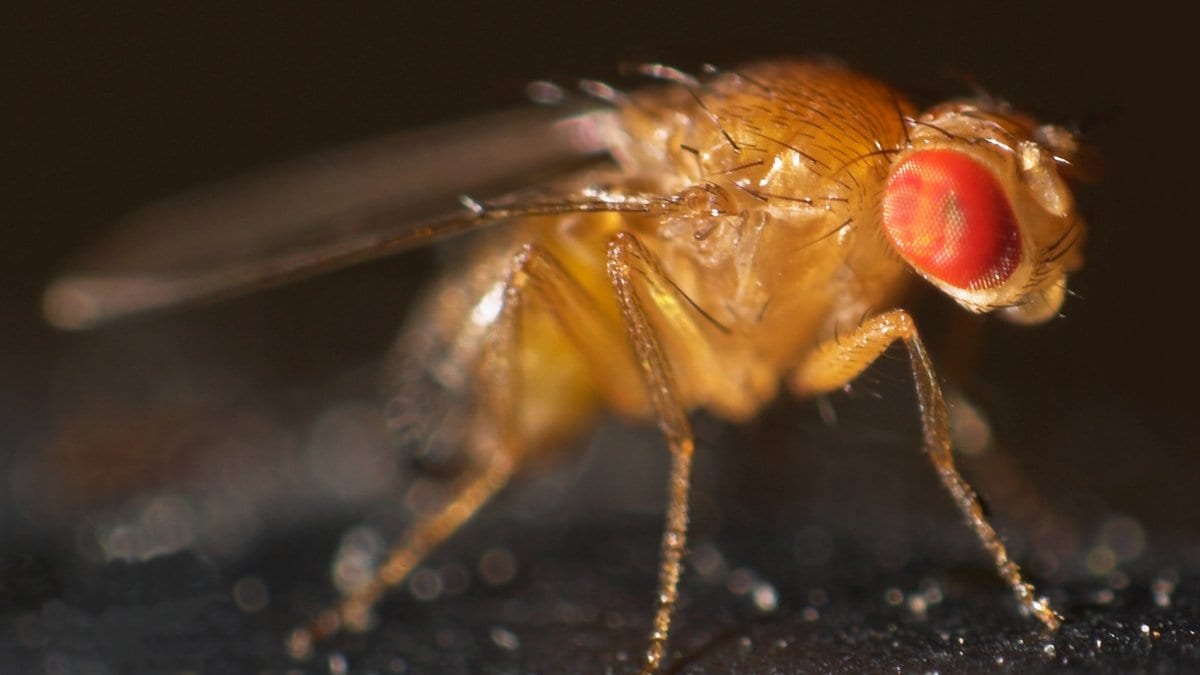
Motor neurons in the fruit fly's feeding circuit help set the order in which muscles contract rather than only carrying commands to them, a Peking University-led team reports in a paper published Aug. 24 in Nature Neuroscience.
The researchers listened to four neurons at once, in simultaneous quadruple-electrode recordings from Drosophila that were actively feeding, and describe what the paper calls a propagating feedforward disinhibition cascade. Food stimuli set off rhythmic firing in a leading motor neuron; that neuron releases the neurotransmitter glutamate and, in one action, both excites the muscle it controls and disinhibits a premotor neuron, lifting an inhibitory brake on it. The freed premotor neuron recruits the next motor neuron in line, and the paper reports a wave that "propagates with millisecond precision down the motor chain."
Behavior analysis and computational modeling showed the patterned activity is independent of the pumping rate, the speed at which the fly draws in food. That, the authors write, lets the circuit "support robust behavior in the face of changing action contexts."
The paper sets the result against what it calls the classical view, in which motor neurons are "the final relays of commands driving behaviors such as breathing and feeding." The authors write that their work "expands the known roles of motor neurons to include the active patterning of precisely ordered motor output." The measurements were made in one feeding circuit in one insect.
Xiu-Wen Sui, Jun-Jie Yi, and Yao Zhou are listed as contributing equally; the senior author is Dong-Gen Luo of Peking University, and co-authors are at the Flatiron Institute in New York and Capital Medical University in Beijing. The code used for data analysis, neuron modeling, and connectomic analysis is posted on GitHub, and the paper says raw behavioral, electrophysiological, and morphological data are available from the corresponding author on request.
Sources
- www.nature.comPeer-reviewed