A Deep Brain Area Tied to Pain Has Four Separate Jobs
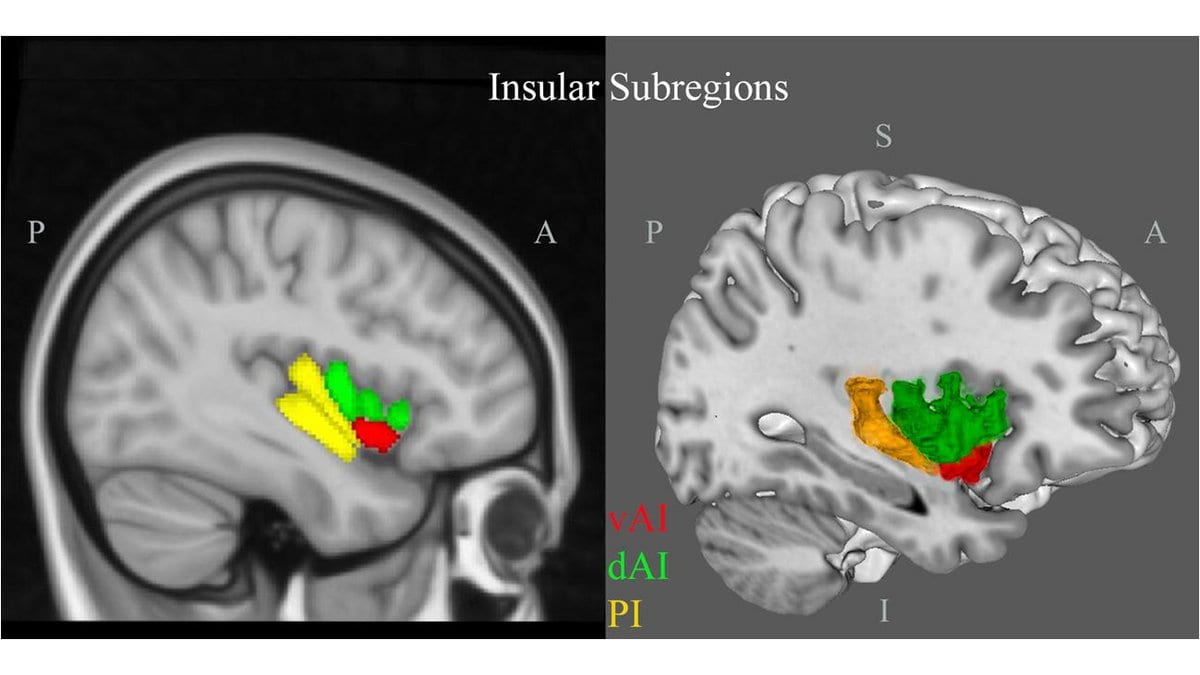
Researchers who stimulated and recorded from electrodes implanted inside the brains of 87 patients report that the insula, a fold of cortex buried deep in each half of the brain, splits into four functionally separate regions. The work was published Oct. 21, 2026, in Nature.
The electrodes were already in place for the patients' own clinical monitoring, which is what makes the measurement possible. The team could pass a small current through one point, ask the person what they felt, and record how nearby tissue responded. A scanner reads activity from outside the skull and cannot switch tissue on. The authors report that the area has a central role in pain, in sensation from inside the body and in feelings, yet its internal layout and the direction of signaling between its parts had remained poorly understood.
The study divides the insula along its front-to-back axis. The upper rear region carries pain, temperature and touch signals laid out by body part. The lower rear region takes in touch signals from several body parts at once. The middle front region is associated with sensations from the internal organs and with anxiety. The front tip barely responds to direct stimulation, yet turns strongly active when a person picks out what matters in a task and when the mode of action changes.
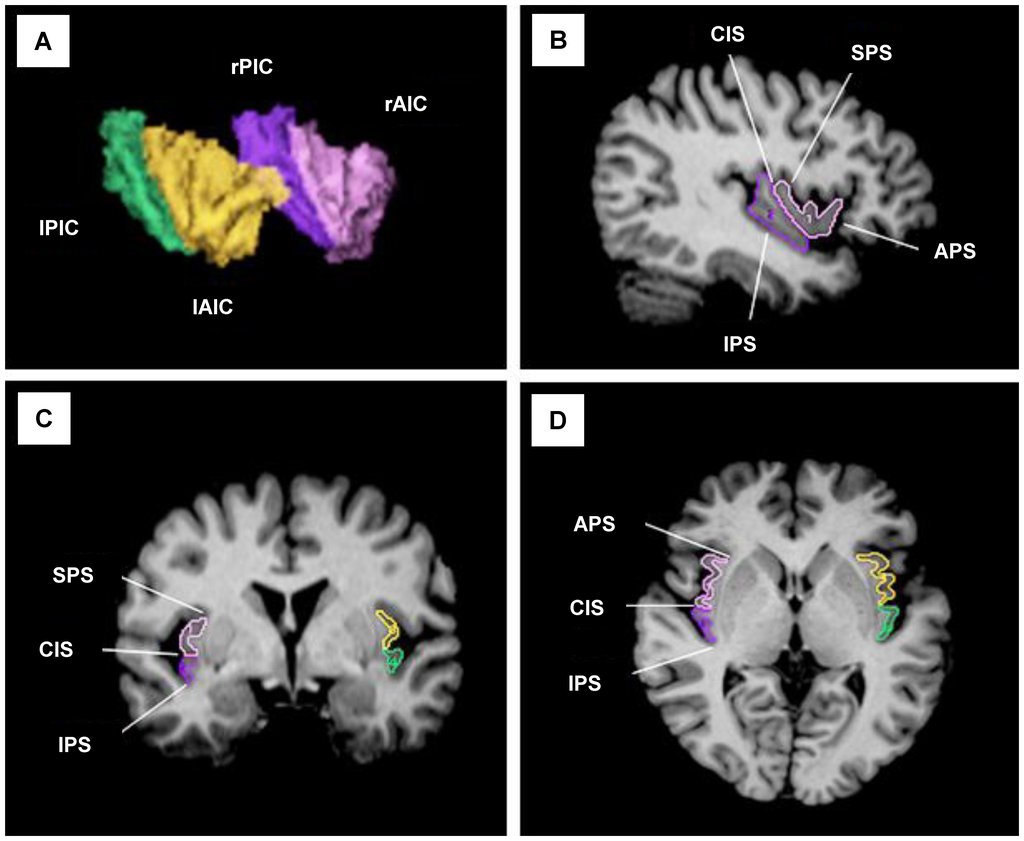
That quiet front tip is the one doing the pushing. The authors report that it exerts strong and direct influence over the other three regions while receiving weaker, indirect input from them, and that it is densely connected to the prefrontal cortex. They describe that asymmetry as a route through which thinking could turn pain and bodily sensation up or down.
The regions were drawn inside an existing map of the insula's cell architecture. Masks for the regions, the connectivity measurements and the stimulation data are posted publicly on GitHub; the underlying recordings are available from the corresponding author on request. First author Julian Quabs, of Stanford University and Heinrich Heine University of Düsseldorf, and senior author Josef Parvizi, of Stanford, worked with colleagues in Germany and Italy.
Sources
- NaturePeer-reviewed

Medical Disclaimer: This content is provided for general informational and educational purposes only. It is not medical advice and should not be used as a substitute for professional medical advice, diagnosis, or treatment. Always consult a qualified healthcare professional regarding any medical condition, concern, symptom, or treatment decision.