Fossil Dung From Montana Turned out to Be Full of Feathers
A lump of fossilized dinosaur dung collected in eastern Montana in 2016 has turned out to be packed with feathers, and a University of Washington-led team reports that two of them have features previously known only from living birds and their immediate ancestors.
The find also points paleontologists to a source nobody had examined. "Since no one has studied feathers in coprolites before, this opens up a whole new avenue for investigation," said lead author Jingmai O'Connor, associate curator of fossil reptiles at the Field Museum, using the scientific term for fossilized dung. She said she hopes others start CT scanning them.
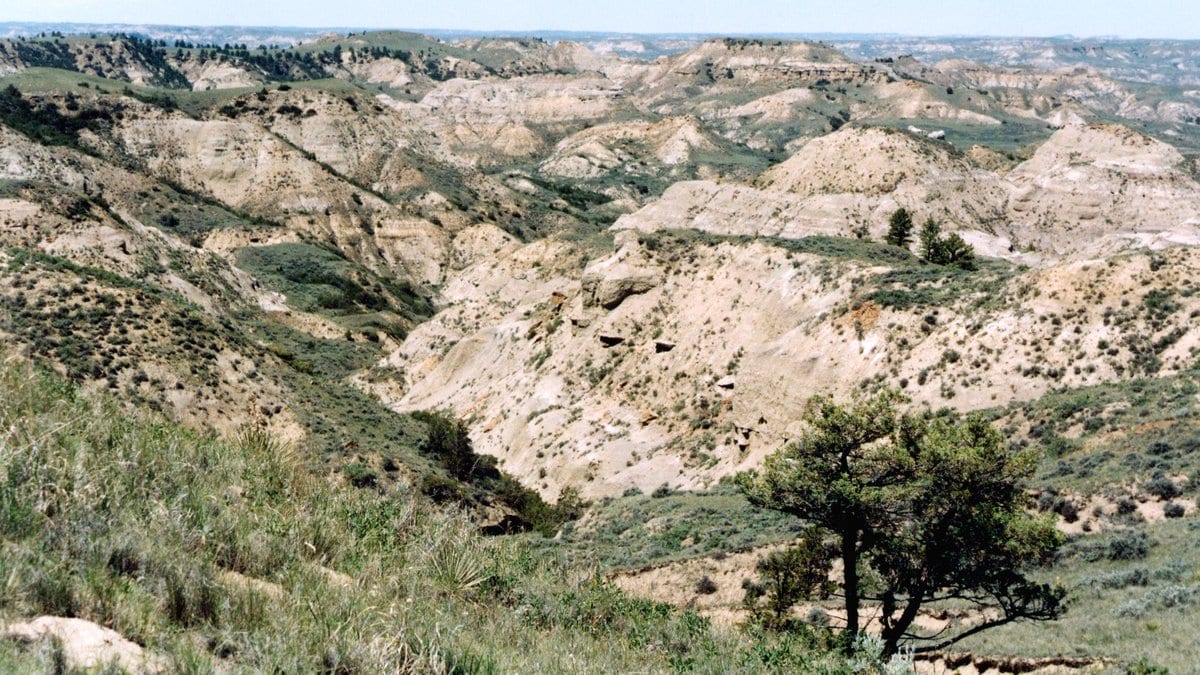
David DeMar Jr., a research scientist at the university, picked the nodule up while collecting fish fossils in the Hell Creek Formation. It was dark reddish-brown and about half the size of a golf ball, and it split open to expose a feather. No feathers had been found there before, he said, after more than 100 years of prospecting.
CT scans revealed several feathers, fish scales from a gar and leg bones from a hesperornithiform, an extinct group of diving birds similar to loons. The team attributes the feathers to that bird, the first feathers ever found from this group. The paper, published on September 10 in Current Biology, describes them as the best-preserved fossil feathers from the Mesozoic, the age of dinosaurs.
The two feathers have a square shaft with a sponge-like center, DeMar said, a combination found in no other Mesozoic feather; the next oldest example is about 10 million years younger, from Denmark.
The group is a close cousin of the birds that survived the mass extinction 66 million years ago, and it died out in it. Some researchers have proposed that the survivors came through because they lived near water; the hesperornithiforms lived near water and went extinct anyway. O'Connor's team offers a different hypothesis: that the kind of feathers these birds had, or the way they molted them, helped decide which lineages died out and which survived.
The coprolite is on permanent display at the university's Burke Museum, in an exhibit called "Drama at the K-Pg."
Sources
- Current BiologyPeer-reviewed
- www.washington.edu