Wildfire Carbon Drives Sulfur Reactions in Sunlit Fresh Water
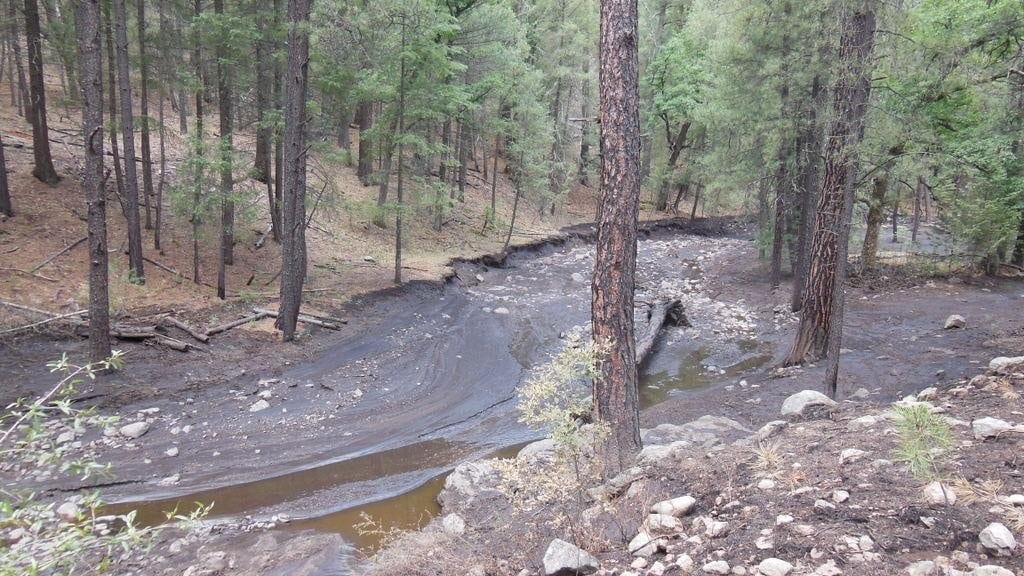
Charred carbon washed into fresh water after a wildfire drives sulfur chemistry in sunlight, according to laboratory experiments published Aug. 19 in Communications Earth & Environment by researchers at the Chinese Academy of Sciences' Chongqing Institute of Green and Intelligent Technology, South China Agricultural University and three other institutions.
The material at issue is dissolved black carbon, the partly burned organic matter that fires leave behind and that rain carries into streams. Rivers downstream of fires often carry raised levels of sulfur-bearing dissolved organic matter with no settled explanation, the authors write, and the experiments were built to test whether the two are connected.
Working in dilute, near-neutral water, a magnetic scanning technique that detects unpaired electrons picked up sulfate-linked radical signals only in sunlit samples containing dissolved black carbon. Signal strength rose with the amount of sulfate and of organic carbon present.
High-resolution mass spectrometry showed more sulfur-containing compounds in the irradiated samples in patterns they read as sulfate and sulfonate groups attaching to unsaturated and aromatic molecules.
Across a range of sulfate levels, the net buildup of dissolved organic sulfur did not rise steadily, indicating that sulfur is added and broken down at the same time.
Samples that were lit and then kept in the dark went on accumulating dissolved organic sulfur, which the authors describe as activity continuing beyond the sunlit period. Their results are indicating that wildfire carbon "can influence sulfur cycling and photochemical reactivity in inland waters."
Sources
- www.nature.comPeer-reviewed