How Much Heat the Ocean Holds Is Now Six Times More Certain
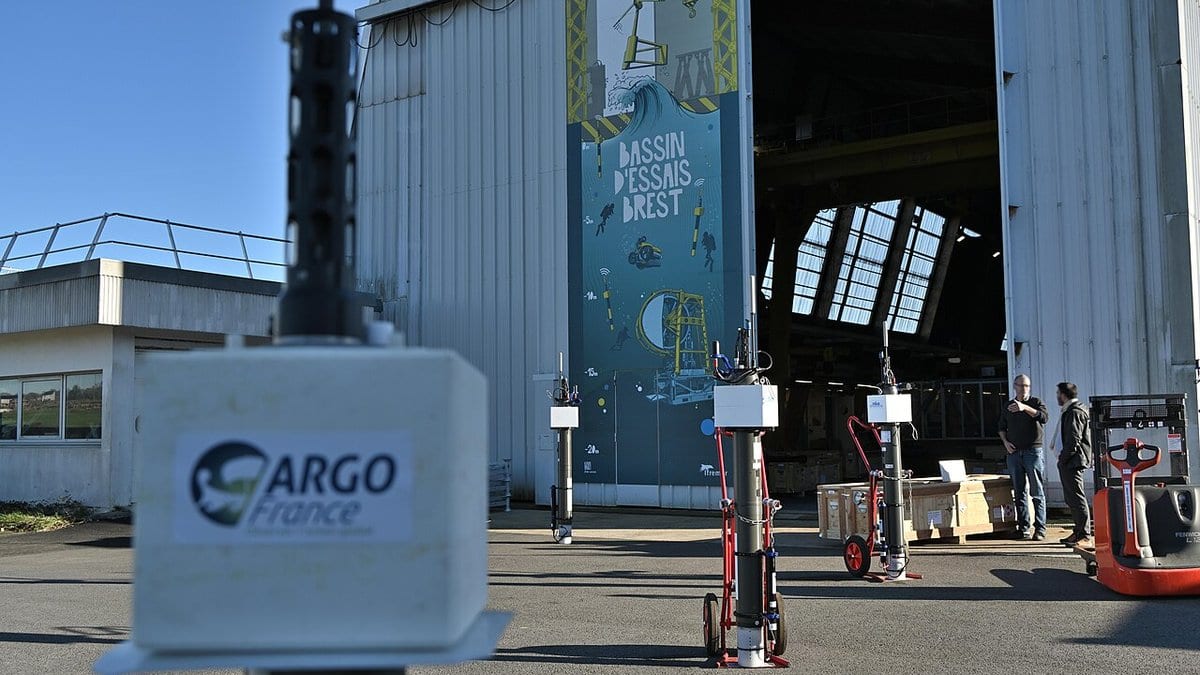
The uncertainty in the global ocean heat record has narrowed roughly six-fold since the 1950s, according to a study published Aug. 29, 2026, in Nature Communications by a team led by the Institute of Atmospheric Physics at the Chinese Academy of Sciences.
The group built what it calls a Large-Ensemble to quantify error in ocean heat content, the energy stored in seawater, from global to regional scales back to 1955, covering eight groups of error sources. For the upper 2,000 meters of the global ocean, the authors put the 5-95% error range at about 111 zettajoules for 1955-1965 and about 19 zettajoules for 2014-2023, a reduction they attribute mainly to better mapping and sampling. A zettajoule is a billion trillion joules.
On that tightened basis, the paper reports an upper-2,000-meter heat gain of 449 zettajoules since 1955, with a 5-95% range of 385 to 519. The authors call that increase "robust."
From 2005 through 2023, they put the warming trend at 10.9 zettajoules a year, in a range of 9.2 to 11.4, equivalent to 0.68 watts per square meter. The increase in the ocean warming rate over the same period is 0.34 watts per square meter per decade, in a range of 0.19 to 0.46, which the authors describe as "small but robust."
Quality control of the observations has recently become "a primary error source," the paper states, because outliers are difficult to detect in eddy-rich regions, parts of the ocean crowded with swirling currents. Uncertainty in the trend comes from spatial gaps, mapping, quality control and the choice of climatology, the authors write, a different mix from the sources that dominate year-to-year values.
Sources
- Nature CommunicationsPeer-reviewed