Under High Emissions, Europe Could Burn Nearly Three Times as Much Land by 2100
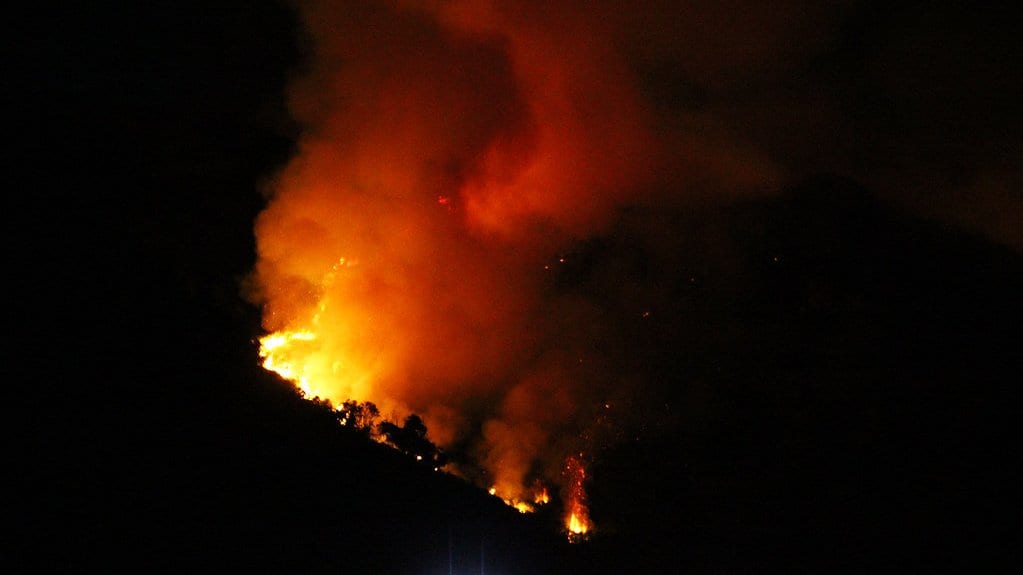
A modeling study projects that the area burning in Europe each year would rise by about 39% under low emissions and by nearly 192% under high emissions late this century, driven by intensified fire weather in scenarios where fire-management capacity does not improve further. The paper, by a team led from the Potsdam Institute for Climate Impact Research, was published Aug. 20 in Global Change Biology.
Those are projections of a future state rather than measurements of one. The two emissions pathways are the standard SSP1-2.6, a low-emissions "sustainability" path, and SSP3-7.0, a high-emissions "regional rivalry" path, and the increases are for the period 2070 to 2100 measured against a 2000 to 2030 baseline, the paper states.
The study also projects what continued improvement in fire management would do. Such improvements could "substantially moderate these increases, reducing burned area by 72%-92% compared to scenarios without these improvements," the authors write. That estimate rests on the historical relationship between the Human Development Index, a standard measure of national development, and fire activity, and the authors qualify it in the same paper: it is unclear, they write, "whether the extent of historical HDI effects on fire activity can be extrapolated to a future with substantially elevated fire risk levels," and extreme fire weather conditions "often make fire behaviour more unpredictable and can easily overwhelm firefighting efforts."
Even with fire-management investment continuing at current levels, the authors report, fire activity still rises in about 55% of Europe's fire-prone regions under strong climate change.
The projections come from two fire models, SPITFIRE and BASE, run inside the LPJmL global vegetation model, which simulates how plants grow and burn, with climate, vegetation and socioeconomic inputs.
Maik Billing of the Potsdam Institute is the corresponding author. Co-authors are at the Senckenberg Biodiversity and Climate Research Centre, the Laboratoire des Sciences du Climat et de l'Environnement, the University of Potsdam, VU University Amsterdam and Goethe University Frankfurt. The paper is open access under a CC BY 4.0 license.
Sources
- Global Change BiologyPeer-reviewed