Diving Seals Reveal Hidden Ocean Turbulence Reaches Half a Kilometer Down
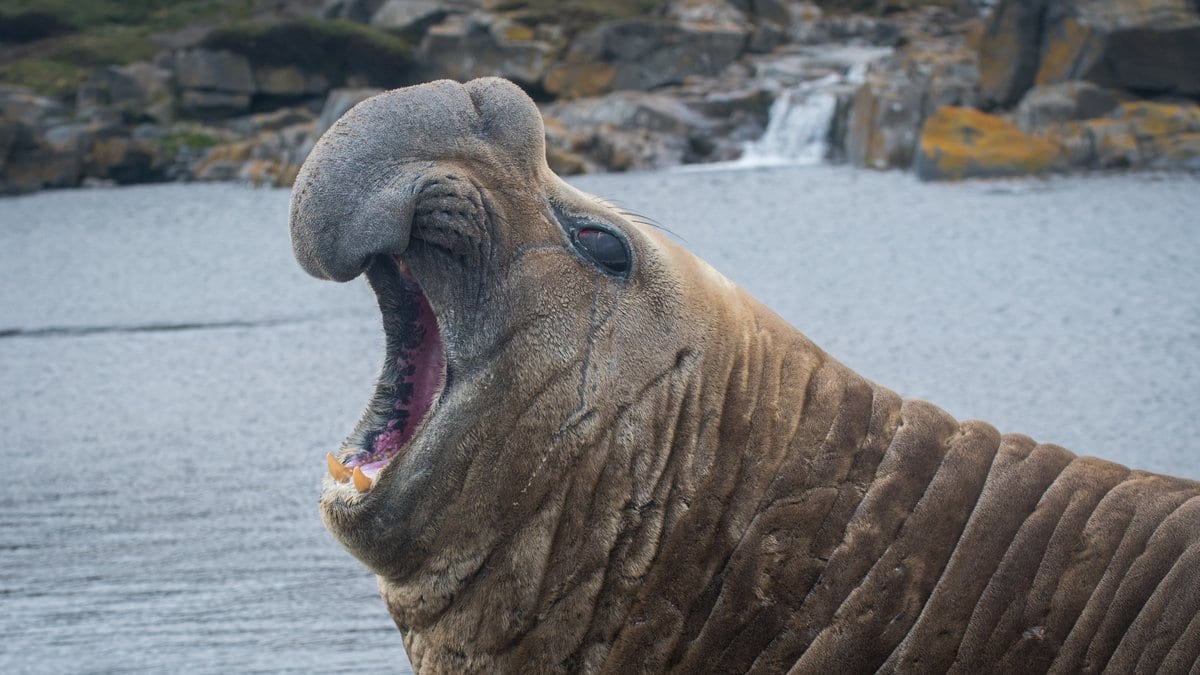
Researchers at Scripps Institution of Oceanography and CNRS have used six years of elephant seal dive data to show that small-scale ocean currents, known to churn the surface, are also active year-round at depths of at least 500 meters in the Southern Ocean. The team says the finding suggests heat and nutrient exchange at depth may be larger than climate models assume.
The paper, published Sept. 4, 2026, in Nature Communications, analyzed 133,598 dives made by instrumented southern elephant seals between 2014 and 2020 in the Indian sector of the Southern Ocean at sub-kilometer resolution.
Ocean fronts 1 to 20 kilometers across, called submesoscales, had been well-documented in the thin surface mixed layer, but "little is known about their existence below it." Lia Siegelman of Scripps, the paper's lead and corresponding author, and colleagues including senior author Christophe Guinet of CNRS/La Rochelle Université found those motions are intensified below the mixed layer and present from the surface down to at least 500 meters year-round.
The activity follows a seasonal pattern: it strengthens each austral spring (September through November) and weakens each fall (March through May). That cycle tracks surface eddy kinetic energy measured from satellite altimetry, a parallel pointing to larger mesoscale eddies above as the source of the deep submesoscales.
Because submesoscales are associated with strong vertical water movement, the team concludes that "vertical exchanges of heat and nutrient at depth may be more important than commonly assumed," which remains an inference, not a direct measurement of the exchange itself.
The dataset is unusual in its reach: electronic tags attached to free-ranging seals supply temperature and depth readings across a remote stretch of ocean that research vessels rarely cover at this resolution or duration.
Sources
- www.nature.comPeer-reviewed