China Is One of Few Countries Where Salt Marsh Is Gaining Ground
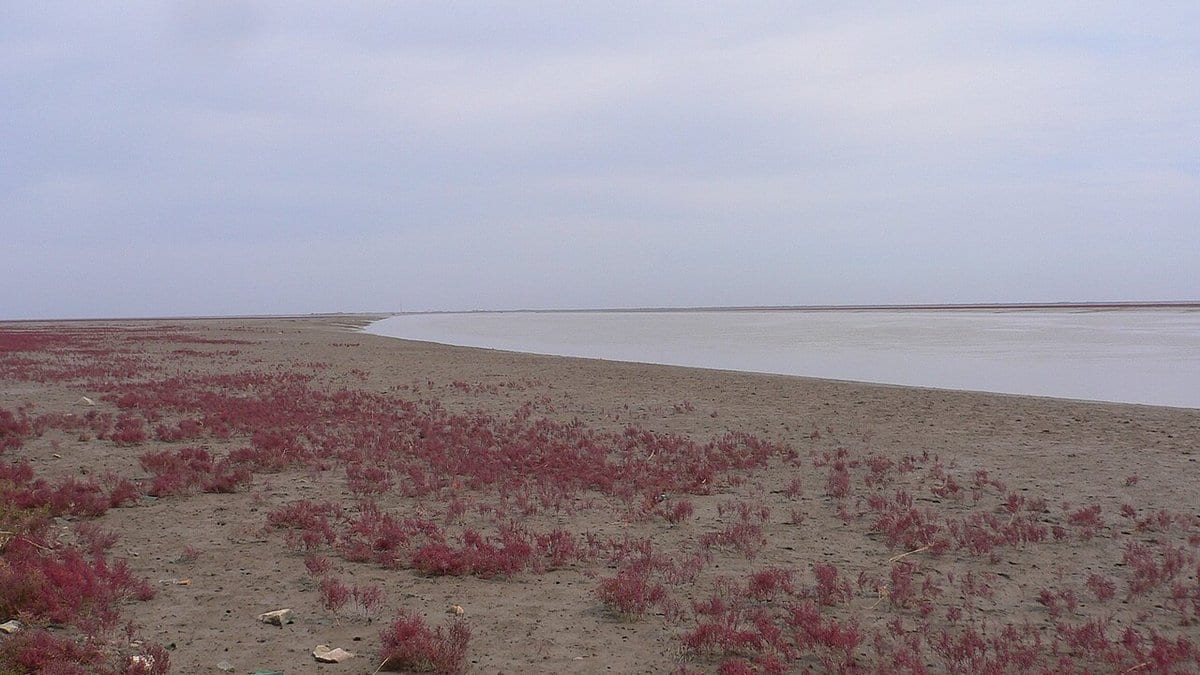
Salt marsh area along China's coast has grown on net in recent decades, and the organic carbon held in the topsoil under those marshes rose overall with it, according to a national mapping study published Aug. 18 in Communications Earth & Environment.
The paper, by Yuhan Zheng and 11 co-authors, used remote sensing and machine learning on land-use and land-cover data to track how much salt marsh China gained or lost and how the surface soil organic carbon changed alongside it. The authors describe China as "one of the few countries to achieve net salt marsh gains in recent decades."
Most of the new marsh came from converting other coastal surfaces rather than from bare ground. Net expansion is associated with overall gains in surface soil carbon "primarily through the conversion of aquacultural ponds, agricultural land and seawater areas," the abstract states.
Those gains are not spread evenly. They "vary substantially across regions and periods," the authors write, so the national picture does not describe any particular stretch of coast.
Marsh expansion and protection, "particularly within protected areas," are associated with the higher surface carbon, per the paper.
Salt marshes are counted as blue carbon ecosystems, meaning coastal habitats that store carbon in waterlogged soil where it decays slowly. The authors present their approach as "a scalable framework for monitoring spatially explicit SOC changes" that "supports the integration of salt marshes into national carbon management."
Sources
- www.nature.comPeer-reviewed