Google's Weather AI Now Learns From Live Satellites and Updates Every Hour
Google began serving a new AI weather model, WeatherNext 3, inside Search, the Gemini app, Google Maps, the Google Maps Platform Weather API and Google Earth Engine on Sept. 3, in an announcement from Google DeepMind and Google Research.
The model issues a new forecast every hour. Google says it resolves key surface variables such as temperature and moisture at 5 kilometers, other surface variables at 10 kilometers, and atmospheric variables such as wind speed at 25 kilometers. Its predecessor, WeatherNext 2, produced forecasts on a 25-kilometer grid in six-hour increments, per the same post.
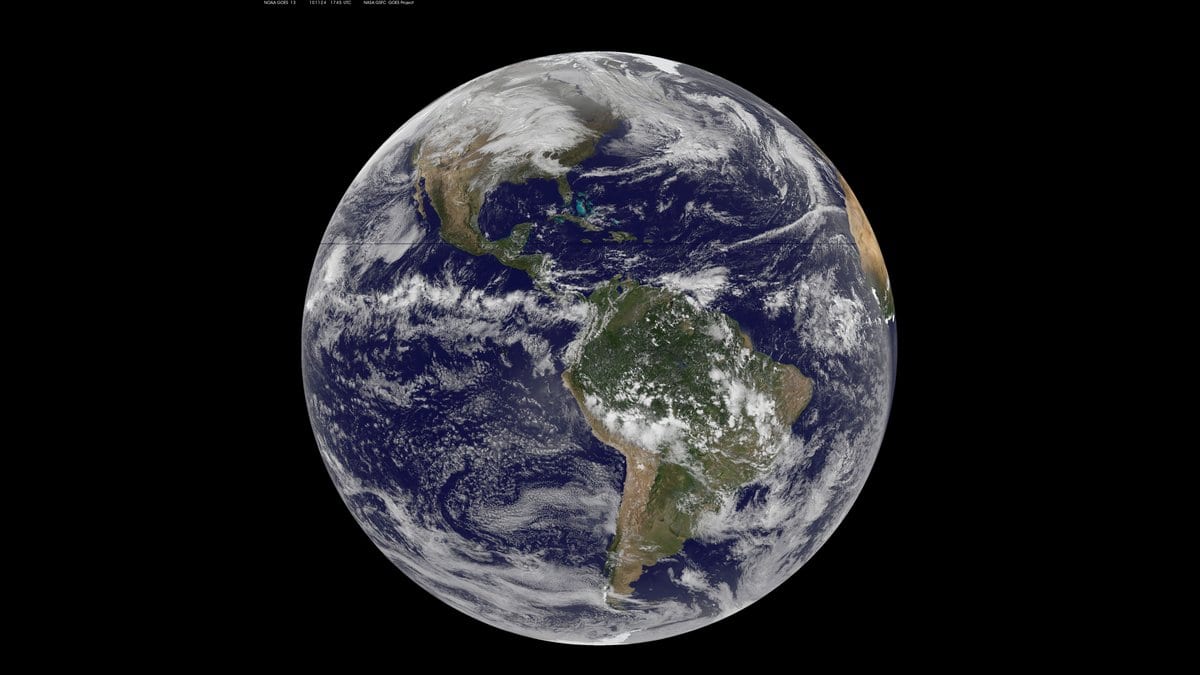
What changed most is what the model learns from. WeatherNext 3 takes in a mosaic of live global geostationary satellite data and trains directly on sparse weather-station readings, the scattered measurements taken at individual sites. Most AI weather models, WeatherNext 2 included, instead train on the output of numerical weather prediction, the physics simulations run on supercomputers, which Google says carries a six-hour data lag.
Google reports accuracy gains on its own evaluations. In medium-range global forecasts, it says comparisons against baselines show a Continuous Ranked Probability Score improvement, a standard score for probabilistic forecasts, of up to 60% against NASA's IMERG satellite rainfall product, 30% against MRMS, and 10% against rain-gauge measurements at early lead times. In its products, Google says people planning a day or more ahead will see up to 50% more accurate precipitation forecasts. The company calls WeatherNext 3 "the most advanced and accurate global weather model to date," a ranking it credits to live evaluations published by Brightband; the announcement includes no independent evaluation.
The model also forecasts wind speed at 100 meters, roughly turbine height, along with cloud cover and surface solar radiation for renewable-energy operators. Google says the hourly forecast data can be queried in BigQuery and Earth Engine, or bulk-downloaded from Google Cloud Storage.