Researchers Turn an Ordinary Lab Microscope Into One That Can See Single Molecules
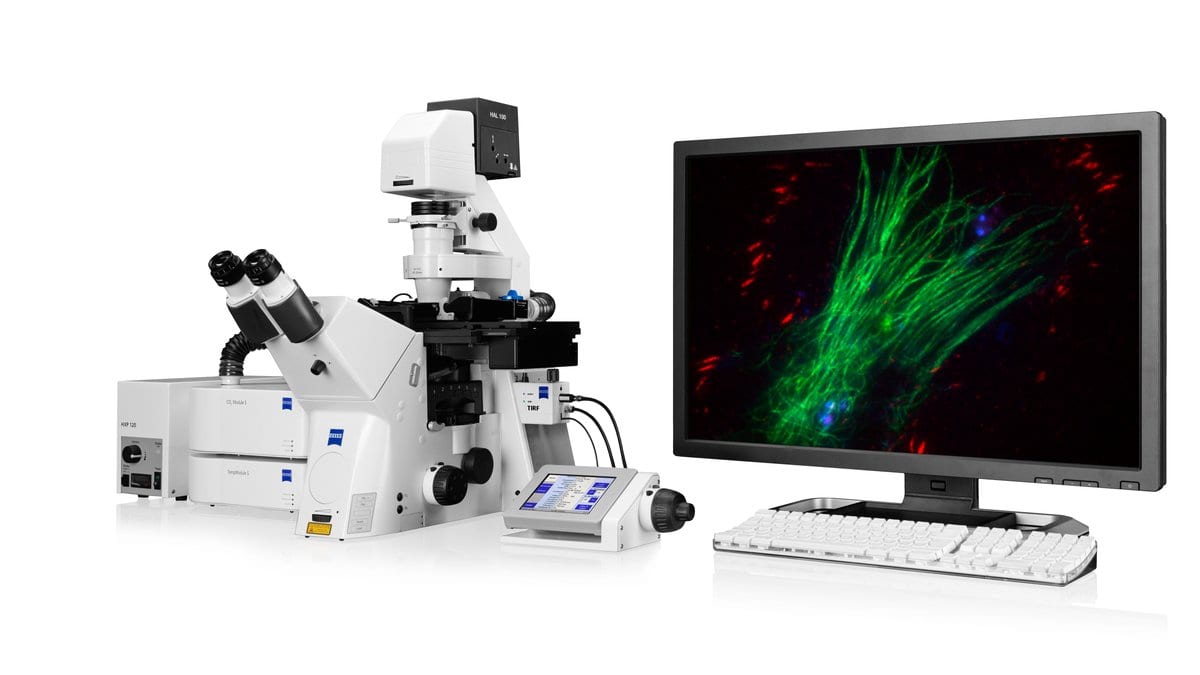
Researchers have converted a standard commercial fluorescence microscope, the kind many shared imaging facilities already own, into an instrument that images single molecules at a scale below 10 nanometers. Their paper was published Oct. 8, 2026, in Communications Engineering.
The paper's stated aim is access. Imaging at that scale normally calls for a dedicated, focus-stabilized system, which the authors call complex and costly for most life-science laboratories. They present the conversion as a way for a laboratory that cannot buy one to do the same work on equipment it already has.
Joaquin Garat of the Instituto de Investigaciones Biológicas Clemente Estable in Montevideo, Uruguay, and colleagues in Argentina, Switzerland and Germany added a focus-lock mechanism of their own design, which keeps the sample from drifting out of focus. They tested the converted microscope on flat and three-dimensional DNA origami, folded DNA nanostructures used as reference rulers, and on multicolor samples of neurons. On those samples, they report image quality and a precision in pinpointing single molecules comparable to the dedicated systems built for this kind of imaging, the developer's says. The design targets DNA-PAINT and STORM, two methods that assemble an image from the brief flashes of single labeled molecules.
Sources
- Communications EngineeringPeer-reviewed