WMO Says El Niño Will Almost Certainly Last Into 2027
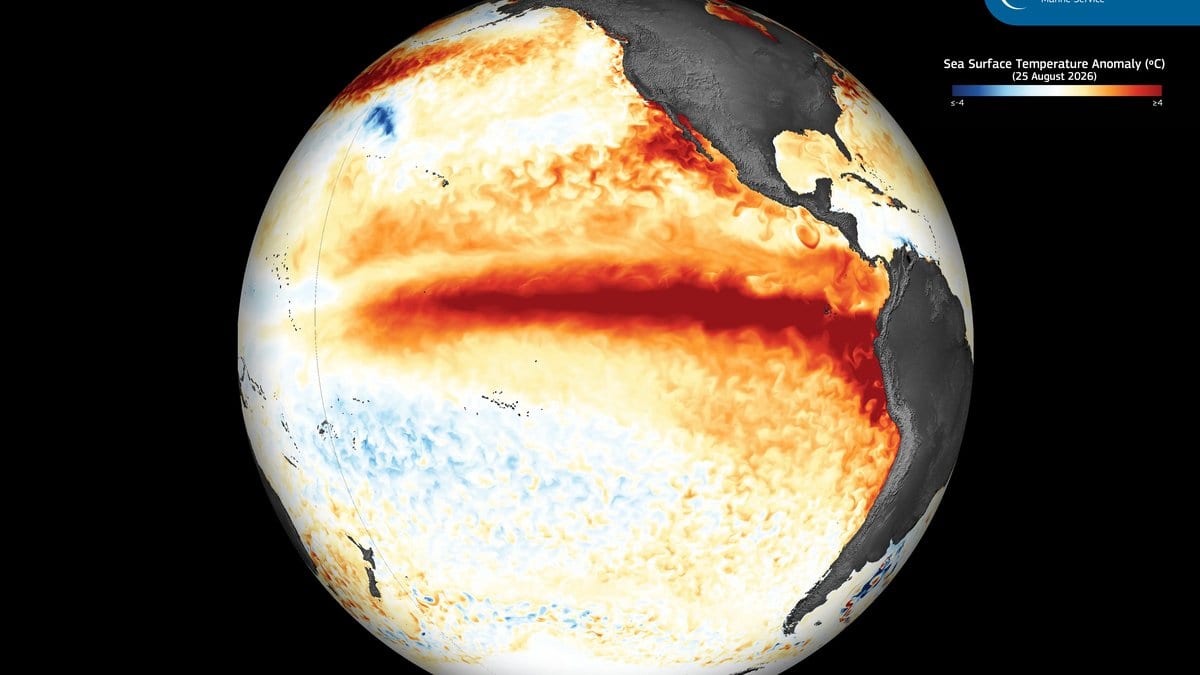
The World Meteorological Organization said Sept. 3 that El Niño is firmly established in the tropical Pacific and forecast that it will strengthen into a very strong event before peaking toward the end of 2026.
WMO said El Niño's persistence through February 2027 carries an "exceptionally high likelihood of nearly 100%," a figure it drew from forecasts by its Global Producing Centres, and added that this is the first time one of its El Niño/La Niña Updates has been so unequivocal.
The forecast rests on measured ocean warmth. The Niño 3.4 index, which tracks sea-surface temperature anomalies in the central-eastern equatorial Pacific, strengthened from an average of +1.5 °C above normal over May–July 2026 to +2.0 °C above normal in July, WMO said. Weekly values rose further between late July and mid-August, ranging from approximately +2.2 °C to +2.6 °C above average. Below the surface, WMO reported that subsurface ocean temperatures in some areas were more than 8 °C above average during July and early August.
The strength of an event alone does not determine how severe its effects will be in any individual country or region, WMO said; those vary by location and season and can be modified by other climate drivers. A companion Global Seasonal Climate Update forecasts a positive Indian Ocean Dipole reaching a seasonal mean of 0.9 °C for September–November 2026, and an equatorial Atlantic that stays warmer than normal. For the same season, WMO's multi-model forecasts indicate an increased likelihood of above-normal temperatures across almost all land areas.
WMO states that El Niño is a natural climate phenomenon and is not caused by climate change. According to the organization, it typically occurs every two to seven years, lasts around nine to twelve months, and reaches peak intensity between November and February.